2026-2027 MEDEX Application Cycle Is Now Open
Applications will be accepted May 1 - October 1, 2026 for June 2027 matriculation.
Prospective applicants should review the updated admissions criteria on the Applicants page before applying.


A MEDEX Magazine Series
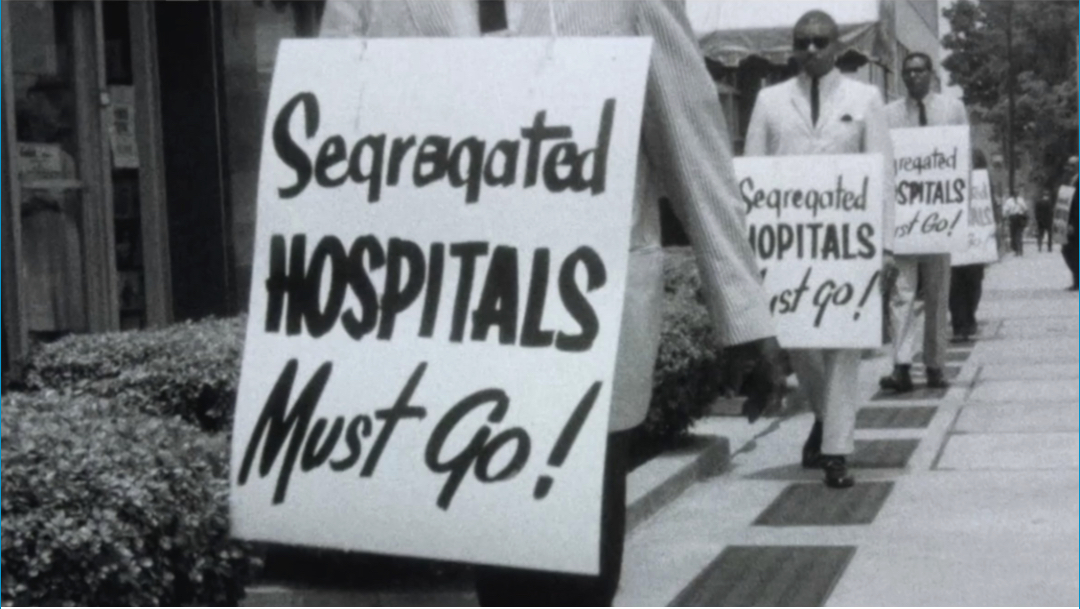

In July 1965, a call from Surgeon General William Stewart marked a major shift in Dr. Richard Smith’s career. Stewart wanted Smith on his executive staff—not to serve as a Peace Corps physician as he had for the previous four years, but now as someone who could help reimagine American healthcare itself. Sitting in Stewart’s wood-paneled office for the first time, Smith felt the gravity of the moment. I know medicine, he thought, but this is different.
The stack of policy briefs on Stewart’s desk was a reminder of the steep learning curve ahead. This wasn’t just about healthcare delivery—it was about mastering the political, regulatory, and financial forces that shaped it. “Most importantly,” Smith later reflected, “I needed to learn how to turn detractors into supporters.”
The complexity of the task often left him feeling like he was back in organic chemistry, wrestling with concepts that didn’t immediately make sense. But he drew on the lessons he’d learned in those early days: Break it down, find the patterns, build understanding piece by piece. Within weeks, Smith would find himself deep into the planning for one of the most significant events of his early career—the 1965 White House Conference on Health.
The conference, scheduled for November, would bring together hundreds of healthcare leaders, policymakers, and educators to confront the growing health manpower crisis. The nation faced a severe shortage of healthcare providers, particularly in rural areas where entire communities might be served by a single overworked physician, or none at all. Meanwhile, medical schools were producing doctors who increasingly entered specialized practice and gravitated toward urban centers, leaving vast swaths of America medically underserved. It was Smith’s job to help shape the discussions—synthesizing research, coordinating logistics, and identifying the most pressing issues. His days of preparation were spent buried in briefing documents, attending meetings, and drafting reports.
But something else was on his mind as well. For months, an idea had been forming—one that had little to do with policy but everything to do with public engagement.
The idea had been forming in Smith’s mind for some time—a vague but persistent thought about how to bridge the growing gap between medical knowledge and public awareness. The nation had invested heavily in medical advancements, yet most people remained uninformed about basic health risks, prevention, and the forces shaping their well-being.
On October 15, 1965, in Los Angeles, that idea crystalized in a way Smith hadn’t expected. Over a twelve-hour conversation with Bernadette Hale, a Hollywood writer, he sketched out the beginnings of something radical—an action-adventure television series built around public health.
The two imagined a charismatic, globe-trotting doctor, part medical detective, part international investigator, named Raider. This character who wasn’t confined to a hospital but who chased epidemics, uncovered medical mysteries, and battled public health threats in high-stakes scenarios. The show, if done right, could educate the public without feeling like education at all.
The next morning, Hale registered the idea with the Writers Guild in Hollywood. Smith couldn’t shake the feeling that they were onto something. But ideas were easy—the real challenge would be making people believe in it.

November 1965
By the time the White House Conference on Health opened in November 1965, Smith had spent months behind the scenes, helping shape the event. Held at the Mayflower Hotel in Washington, D.C., it gathered more than 800 healthcare leaders, policymakers, and educators to tackle one of the most pressing crises in American medicine—the growing shortage of healthcare providers.
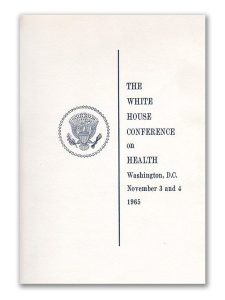
Among those in attendance was Dr. Eugene Stead, the founder of the first physician assistant program at Duke University. Smith and Stead were following different trajectories at this stage of their careers, but the event marked a key convergence where their shared commitment to addressing the nation’s healthcare challenges began to take shape.
Discussions focused on training non-physician providers and embedding them within communities to meet local needs. These bold ideas, which challenged traditional top-down healthcare delivery models, deeply resonated with Smith. Though the Duke PA program Stead had recently established and the MEDEX Northwest program Smith would later develop differed in structure and approach, both programs shared a vision rooted in this conference and its focus on innovative solutions for the country’s healthcare crisis. The very presence of both Smith and Stead at this historic event, in fact, reflected a growing movement among healthcare leaders to confront the health manpower crisis and inspired bold, practical innovations that would ultimately reshape how care was delivered.
Throughout the two-day event, Smith worked behind the scenes, synthesizing notes and helping shape the conference’s key takeaways. The emphasis on rethinking healthcare delivery validated many of the ideas he had been contemplating and revealed how they fit into a broader, national conversation.

During a coffee break, Smith found himself standing next to Howard Ennes, a seasoned public health educator whose work Smith had long admired. Around them, officials from the AMA argued with representatives from rural health associations, their voices rising above the steady buzz of the larger crowd. Raider, the heroic globetrotting Hollywood doctor, came to mind.
“We can train all the providers we want,” Smith said, gesturing toward the animated group, “but there’s still something missing in this entire conversation.”
Ennes raised an eyebrow. “What’s that?”
“The public. Their understanding. Their engagement.” Smith set down his coffee cup. “What good are more doctors if people don’t recognize health threats or know when to seek care? If they don’t understand how diseases spread or how to protect themselves?”
“That’s always been the challenge in public health education,” Ennes nodded. “Pamphlets go unread. Radio spots get ignored.”
“Because we’re using the wrong medium,” Smith countered, his voice gaining intensity. “The average American spends several hours a day watching television. What if we met them there—not with dry documentaries, but with something they’d actually want to watch?”
Ennes frowned. “You’ve lost me.”
“I’m talking about making life-saving information accessible,” Smith replied. “Look at what ‘The Untouchables’ did for understanding organized crime, or how ‘Perry Mason’ changed how people think about the legal system. Why not do the same for public health?”
“Imagine a television series—prime time—following a brilliant medical investigator who travels the world stopping disease outbreaks before they become pandemics. Every week, viewers would learn about real public health principles while being entertained.”
“You’re talking about turning epidemiology into entertainment?” Ennes’s skepticism was evident.
“I’m talking about making life-saving information accessible,” Smith replied. “Look at what ‘The Untouchables’ did for understanding organized crime, or how ‘Perry Mason’ changed how people think about the legal system. Why not do the same for public health?”
“Because networks want gunfights and romance, not mosquito abatement and contact tracing,” Ennes countered wryly.
“What about a malaria outbreak that threatens to destabilize a strategic region? Or a poisoning plot that could affect thousands? Or a mysterious illness striking down political leaders?” Smith leaned forward. “These aren’t just health stories—they’re mysteries, thrillers, international intrigue. And they happen to be true.”
Peter Wyden from the popular weekly magazine Ladies’ Home Journal and Ernest Ager, Washington’s State Epidemiologist, had drifted over during the exchange. Wyden whistled softly when Smith outlined his concept.
“You’re talking about a massive undertaking,” Ager said. “Getting a foot in Hollywood’s door won’t be easy.”
“Neither is changing healthcare delivery systems,” Smith replied, glancing toward the main conference hall where discussions about non-physician providers continued. “But that’s not stopping us from trying.”
As the conference proceeded, Smith continued developing both tracks of his thinking: how to extend the physician’s reach through trained assistants and how to extend public health knowledge through entertainment. He saw them as complementary approaches to the same fundamental problem: Too many people were suffering and dying from preventable causes.
The conference ended, but Smith couldn’t let the idea go. He knew a character like Raider could change the way the public saw public health. But another, equally urgent challenge was emerging—one that would reshape not just how people learned about healthcare, but who could provide it. Eventually, he would have his answer—not just for Raider, but for a much bigger question about the future of healthcare itself. And he wouldn’t be the only one who saw the potential.
As Smith worked to bring the hidden world of public health into the public eye, another battle over visibility was brewing—one that wasn’t about disease, but about justice. Despite ongoing debates over healthcare expansion, millions of Americans were still being denied care outright, turned away at hospital doors simply because of the color of their skin. It was a crisis not just of policy but of fundamental civil rights, and the government was about to force the issue.
In February 1966, Smith sat in U.S. Surgeon General William Stewart’s office. Outside, the cherry trees were just beginning to bud, though he barely noticed their delicate pink promise. His attention was fixed instead on Stewart’s demeanor, his thoughtful and measured expression. The atmosphere in the office crackled with anticipation of what Stewart was about to propose.
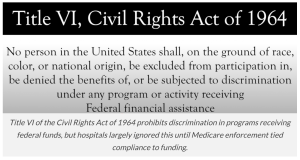
In July of the previous year, President Lyndon Johnson had signed the Medicare Act, a groundbreaking moment for American healthcare. Hidden among its transformative policies was a single line with seismic potential: Hospitals receiving federal funds must desegregate—not just their patient wards, but every facet of their operations. Now, less than a year later, the compliance deadline loomed like a storm cloud on the horizon.

Stewart leaned forward slightly, his gaze locking onto Smith. “We need someone to lead the field operations for hospital desegregation,” he said, his voice calm but firm. “Someone who understands both medicine and civil rights. Someone who can handle delicate situations with diplomacy, but also with strength.” A pause hung between them before he added, “I want you to do it, Dick.”
The magnitude of the task settled on Smith’s shoulders. It was the kind of burden he’d carried since graduating from Howard Medical School and stepping into a profession where doors routinely closed in Black physicians’ faces. He’d witnessed firsthand how the medical establishment maintained its segregated system. He’d seen the hospitals that wouldn’t grant privileges to his classmates regardless of their qualifications, the residency programs that had unspoken quotas, the patients who suffered because of these divisions. In Nigeria with the Peace Corps, he’d learned to deliver care in challenging circumstances, to find solutions where resources were scarce and need was overwhelming. This wasn’t just a professional assignment, this was personal in ways Surgeon General Stewart might never fully comprehend.
Medicine is supposed to heal, he thought, his anger simmering beneath the surface. Not divide. How could institutions meant to save lives perpetuate a system that cost so many?
Smith’s mind raced. Seven thousand hospitals. The number staggered him. Seven thousand institutions entrenched in decades of discriminatory practices, now required to change, and do so quickly. The newly passed Medicare legislation had given the Surgeon General’s office leverage: Hospitals would receive federal funds only if they ended their practices of segregation. It was an elegant solution, using financial incentives where moral arguments had failed. Of course, Smith knew from experience that laws alone didn’t change hearts. The struggle ahead would be monumental, but the potential impact was equally vast. He nodded decisively. “I’ll do it.”

Working with Deputy Surgeon General Leo Gehrig and Robert Nash, a skilled administrator, Dr. Smith began assembling a team of 350 staff members. Their first task was deceptively simple: Send questionnaires to every hospital in America, asking them to detail their racial policies. The responses revealed the sobering truth of segregation in medicine, particularly in the South: separate wards, duplicated X-ray facilities, different waiting rooms, even segregated blood supplies. These practices weren’t just tolerated, they were systemic—openly described and defended in many of the written responses.
Late one night, Smith sat alone in his office, reading through the damning documents. His stomach tightened as he read hospital administrators’ justifications for these practices, written in cold bureaucratic language. Medicine is supposed to heal, he thought, his anger simmering beneath the surface. Not divide. How could institutions meant to save lives perpetuate a system that cost so many? But he knew that his personal outrage wouldn’t dismantle a legacy of injustice. Closing the file, he resolved to focus on what came next. This was a battle for the soul of healthcare—for the soul of America—and he was determined to see it through.

April 1966 – Marshall, Texas
Just two months into his new role as Director of Field Operations for the Office of Equal Health Opportunity (OEHO), Dr. Smith was hard at work when his secretary knocked on the door.
“Excuse me, Dr. Smith. I think you’ll want to take this call. It’s Vice President Humphrey’s office.” Smith’s steady hand betrayed none of the tension coursing through him as he reached for the phone.
“Dick, this is Hubert Humphrey,” came the Vice President’s unmistakable voice, warm and full of energy. “How are you, my friend?” It seems Vice President Humphrey had been keeping his eye on the important work that Richard Smith had been doing since the two of them met the previous year at the White House Conference on Health. “The Surgeon General speaks very highly of you, Dick, and I have to say, I’m impressed.”
“Thank you, Mr. Vice President,” Smith replied, his voice steady but curious about the reason for the call. “What can I do for you?”
”Well Dick, I’ve got a special request from the President himself,” Humphrey continued. “He wants you to personally oversee the desegregation of Harrison County Hospital in Lady Bird Johnson’s hometown of Marshall, Texas.”
Smith straightened in his chair. A direct order from the President. “I understand, sir,” he said, already feeling the importance of the assignment settling on his shoulders.
“We know it won’t be easy,” Humphrey added, his tone softening. “But this is an important step—not just for Marshall, but for the entire country. I don’t need to tell you how much is riding on this.”
“You don’t, sir,” Smith said firmly. “I’ll get it done.”
Humphrey’s voice brightened. “That’s exactly what I was hoping to hear. Good luck, Dick—and let us know if you need anything.”
As the line clicked off, Smith set the receiver down slowly. There can be no failure here, he thought.
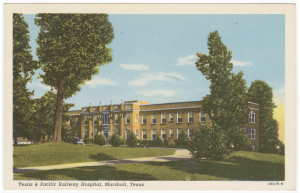
The flight from Washington, D.C. to Dallas, TX left Dr. Smith with knots in his stomach, though years of navigating racial tensions had taught him to maintain an outward calm. At the airport, he was met by the Regional Director of Health, Education, and Welfare, a man whose name briefly caught him off guard. “Dr. Bond, James Bond, at your service,” the man said with a wry smile.
Smith raised an eyebrow at the absurdity. James Bond? You’ve got to be kidding me. A faint smile formed in the corners of his mouth, and for a moment, the tension eased. “Well, I suppose it’s fitting, given the mission,” he said, shaking the man’s hand firmly. Anything to break the ice before we step into the fire.
All amusement at the coincidence of his encounter with “007” vanished as the two crossed into Harrison County on their way from Dallas to Marshall. Out of nowhere, more than a dozen pickup trucks had materialized around them, gun racks prominently displayed through their rear windows. We notified the hospital administration, he thought, watching another truck roar past with a blaring horn, but who told these hooligans we were coming?
The convoy took turns tailgating their government car, each pass accompanied by the obnoxious and threatening sounds of horns and engines. Bond maintained a steady speed. His calm presence countered the increasingly aggressive display around them. The harassment continued until they reached the Marshall city limits, where the trucks peeled away as suddenly as they had appeared. When they finally pulled into the hospital parking lot, Smith let out a long breath, the tension in his shoulders finally releasing. But the knot in his stomach didn’t dissipate. That was just the welcome committee, he thought. The hard part would come soon enough.
“We won’t comply,” the man said flatly. “This law is unfair, and we won’t be bullied by Washington.” The silence that followed was deafening. Smith’s hand froze mid-motion as he reached for another document. His eyes met the man’s gaze, and without blinking, the administrator said, “We don’t need your money.”
The hospital lobby gleamed. The floors were polished to a mirror-like shine, and the staff’s tight, bright smiles felt rehearsed, their cheerfulness too perfect to be genuine. Dr. Smith could spot the performance—years spent acting in his younger days in summer stock theater back in Norwalk, CT had taught him how to recognize when someone was putting on a show. The administrator’s handshake was firm but fleeting, a practiced gesture that revealed little. Smith knew the real test would come in the boardroom.
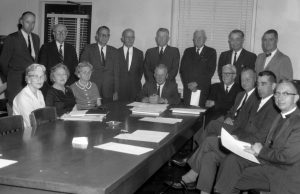
The hospital board members arranged themselves around the long table, their faces offering little. Smith withdrew the documents from his briefcase with deliberate care: first the Surgeon General’s introductory materials outlining the new law, then the hospital’s own completed OEHO questionnaire. The familiar rhythm of these movements helped steady him. He’d done this in training sessions dozens of times, but this was different. This was the real thing. This was for the President.
As Smith spoke, the administrator leaned back in his chair, arms crossed. His expression shifted from feigned politeness to open defiance. Then Smith reached for what those in his office had come to think of as their ace in the hole—the financial consequences of non-compliance. He laid out the stakes with absolute clarity. His voice remained steady as he explained that continuing their discriminatory practices would mean forfeiting millions in annual Medicare payments. The hospital would lose its access to Department of Defense surplus equipment, and their supply of Department of Agriculture surplus food would be cut off.
“We won’t comply,” the man said flatly. “This law is unfair, and we won’t be bullied by Washington.”
The silence that followed was deafening. Smith’s hand froze mid-motion as he reached for another document. His eyes met the man’s gaze, and without blinking, the administrator said, “We don’t need your money.”
“You just walked away from twenty-nine million dollars,” Smith said, his voice calm but final. And you will need it, he thought, watching the administrator’s face for any flicker of doubt.
Smith let the heavy, oppressive silence settle into the room. His eyes quickly panned the room looking at each board member, searching for any sign of dissent. Nothing. Their faces were stone; their silence was complicit. They’re united, every single one of them, he thought. There’s no cracking this one today.

The drive back to Dallas was a somber one. As the Texas landscape rolled past, Dr. Smith’s mind churned with the implications of this apparent failure. Each mile marker seemed to bring him closer to the moment he’d have to report back to Washington. After some time, Bond broke the silence, his voice calm and pragmatic.
“Dr. Smith,” he said. “Texans in power will fight tooth and nail to protect their pride—until they realize it’s costing them more than they’re willing to pay.”
Smith glanced over, the defiance of the hospital administrator still fresh in his mind. “And when they do realize it, what happens?”
Bond smirked, his eyes steady on the road. “They find a way to save face while quietly doing what benefits them most. You hit them where it hurts today: their wallets. Trust me, they’re already doing the math.”
Smith let out a tired laugh, shaking his head. “You seem pretty sure of yourself.”
Bond chuckled confidently. “Because I’ve seen it before. Pride might keep them stubborn for a while, but it doesn’t pay the bills. Once they figure out the dollars will dry up, they’ll cave quicker than a sandcastle at high tide.”
Smith stared at the fading horizon as his colleague’s words echoed in his mind. The tight knot in his chest began to ease, but his doubts didn’t fully lift.
Back in Washington, D.C., Dr. Smith briefed his superiors on his failure to fulfill President Johnson’s personal request. His senior colleagues at OEHO decided the best course was to let the situation simmer for a bit. Three days crawled by with no word from Marshall. Then, the call came. The chairman of the hospital board’s voice came through clear and firm: “The hospital will immediately end all racial discrimination.” When Smith reminded him of their administrator’s adamant stance just a few days prior, the chairman’s response was: ”Well, Dr. Smith, the hospital just got a new administrator, and things have changed.”
As Smith hung up, he allowed himself a brief smile. Bond was right, they had done the math.
June 1966 – Baton Rouge, Louisiana
In the weeks after the breakthrough in Marshall, Smith received another call, this one from Louisiana. The hospital administrator’s voice shook as he explained why he couldn’t desegregate his facility. His city had tried to integrate their public swimming pool the previous year. A bomb had killed a little girl. “We can’t take that same risk again,” the man said.
Smith closed his eyes for a moment, acknowledging the tragedy but held firm. “I am sorry for that little girl, but that incident doesn’t change the law. The law requires an end to hospital segregation based on race,” Smith said firmly. “We’ve entered a new era. Discrimination will no longer be rewarded.”
“Who do you report to?” the administrator demanded.
“The Surgeon General of the United States.”
“And who does the Surgeon General report to?”
“The President of the United States.”
The line went dead.
“I don’t care WHAT you want to do!” Johnson had bellowed. “I’m coming down there at noon on Friday to attend Senator Russell Long’s daughter’s wedding. And I want your ‘blankety blank’ hospital desegregated by then. Do you hear me clearly?”
Thirty minutes later, the administrator called back. His tone had shifted dramatically. “Dr. Smith,” he pleaded, “can you send someone down here to help me desegregate our hospital?”
Skeptical of the administrator’s sudden change of heart, Smith responded, “We could probably have a team there in a couple of weeks.”
“No,” the administrator’s voice cracked with urgency. “We need someone here within three or four days.”
Smith paused for a few seconds, baffled by the situation, “Okay, I’ll have a couple of people from the Social Security Office in New Orleans there in two days.” The administrator thanked him three times before hanging up.
Before Smith could puzzle out this dramatic reversal, his phone rang again. This time it was Vice President Humphrey, and Smith could hear the laughter in his voice.
“Dick, did you just get a call from a Louisiana hospital administrator?”
“Yes, Mr. Vice President.”
Humphrey could barely contain himself as he explained. The administrator had somehow reached President Johnson directly in the Oval Office. The conversation had been brief. “I don’t care WHAT you want to do!” Johnson had bellowed. “I’m coming down there at noon on Friday to attend Senator Russell Long’s daughter’s wedding. And I want your ‘blankety blank’ hospital desegregated by then. Do you hear me clearly?” The President had slammed down the phone.
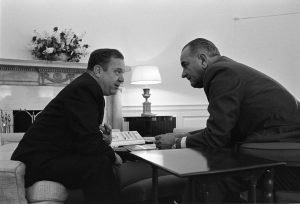
Sometimes change comes through moral persuasion, Smith thought as he arranged for a team from the New Orleans Social Security Office to assist with the hospital’s sudden transformation. And sometimes it comes through the power of a President’s fury.
Summer 1966 – Baltimore, Maryland
As spring turned to summer in 1966, the battle for desegregation wasn’t fought only in hospital corridors and board rooms. In Baltimore, at the Social Security Administration building, a different kind of resistance emerged—one that threatened to undermine their entire effort through the quiet manipulation of data.
The first signs were subtle. Records that tracked hospital compliance began showing inexplicable changes. Facilities that had failed inspection were suddenly appearing as cleared in the system overnight. Smith’s team would arrive at work to find hospitals approved for Medicare that they knew hadn’t met the basic requirements for desegregation.
Someone’s getting into the system at night, Smith realized. But who has that kind of access? And who stands to gain? The computerized records were the backbone of their enforcement—if they couldn’t trust their own data, the whole program could unravel.
The solution was both primitive and effective, though a bit uncomfortable for OEHO staff, who began taking rotating shifts sleeping on cots in the cavernous computer room. Through the night, they kept watch over the hulking mainframe that held the fate of hospital desegregation in its circuits. The room hummed with the steady drone of machinery, its lights blinking like electronic stars in the darkness.

They never caught the phantom data manipulator. But with the installation of their makeshift guard system, the mysterious overnight clearances stopped as suddenly as they had begun. The incident served as a sobering reminder: Resistance to change could wear many faces, from the overt threats of gun-toting segregationists to the invisible hand of someone with a password and a grudge.
The computer room guard system was just one of many extraordinary measures Smith’s work demanded. Late one night, after another marathon session reviewing compliance reports, Richard finally made it home well after midnight. He found his wife still awake, sitting in the dimly lit kitchen.
“The boys waited up for you until nine,” she said quietly. “Dirk built a fort in the living room he wanted to show you, and Rik drew a picture of you fighting the bad guys. He said you’re a superhero.”
Smith closed his eyes, guilt washing over him. “I’ll make it up to them tomorrow.”
“You said that yesterday.” She pushed a plate of cold dinner toward him. “And you have that conference call with the regional directors at seven in the morning.”
He nodded, the weight of his absence from home adding to the burden he already carried. This work was costing him more than late nights and stress; it was stealing moments he would never get back. But what choice did he have? The stakes were too high to step back now.
“The boys waited up for you until nine,” she said quietly. “Dirk built a fort in the living room he wanted to show you, and Rik drew a picture of you fighting the bad guys. He said you’re a superhero.” Smith closed his eyes, guilt washing over him. “I’ll make it up to them tomorrow.”
As Richard picked at the cold dinner, his exhaustion couldn’t quiet his racing mind. Each day brought new challenges, new forms of resistance to overcome. The shape of that resistance shifted from place to place, demanding different parts of himself in response. What began as a straightforward enforcement mission had evolved into a moving target, each step forward met by entrenched systems reshaping themselves to resist.
In the rural South, threats and violence remained the weapons of choice. But in America’s major cities, resistance wore a veneer of sophistication, hiding behind professional credentials and policy concerns. Nowhere was this clearer than in Smith’s next major confrontation.
June 1966 – Manhattan Beach, California
The challenge in Los Angeles would prove different but no less daunting. Smith found himself facing fourteen present and past officers of the Los Angeles County Medical Society in a private home in Manhattan Beach. The tension in the room was palpable even before he began speaking. These weren’t blatant segregationists; these were sophisticated physicians who had wrapped their resistance in layers of professional indignation.
Their hostility hit him like a physical force. He couldn’t complete a single sentence without interruption. When he produced their own OEHO questionnaire documenting the hospital’s discriminatory patient admission and ward assignment practices, they questioned their office’s interpretation, their voices rising in practiced outrage.
Standing beside his rental car, Smith turned to face them. His voice carried the weight of every hospital corridor he’d walked, every segregated ward he’d seen, every life lost to discrimination’s cruel mathematics. “Comply with the law,” he said simply, “and things will work themselves out.”
After an hour of hostile denials and accusations that OEHO couldn’t possibly understand their “unique” situation, Smith had heard enough. Without a word, he stood, picked up his briefcase, and walked toward the door. To his surprise, the doctors followed him out into the street, their professional demeanor crumbling as they shouted after him.
“You don’t understand!” “Our problems are different than other parts of the country!” “We can’t…” “It’s too difficult…”
Standing beside his rental car, Smith turned to face them. His voice carried the weight of every hospital corridor he’d walked, every segregated ward he’d seen, every life lost to discrimination’s cruel mathematics. “Comply with the law,” he said simply, “and things will work themselves out.”
Their shouts followed him as he drove away. Within a month, L.A. County Hospital had ended its discriminatory practices and received Medicare certification. The work continued, but the pushback was evolving in ominous ways.
The computer room guard system, the presidential intervention in Louisiana, the economic pressure in Marshall, and the confrontation in Los Angeles each represented a different face of the same fundamental struggle. What had begun as a straightforward enforcement mission had evolved into a complex battle against deeply entrenched systems that adapted and transformed with each confrontation. The work continued, but Smith was approaching his breaking point. And then came Philadelphia.
July 1966 – Philadelphia, Mississippi
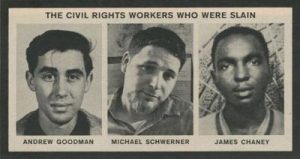
Of all the hospitals Smith faced during the desegregation campaign, none haunted him like the one in Philadelphia, Mississippi. The town’s name alone evoked the trauma of recent history: It was there, just two years earlier, that civil rights workers Mickey Schwerner, James Chaney, and Andrew Goodman had been murdered by the Ku Klux Klan for helping Black citizens register to vote.
When asked about the killings, the administrator of Neshoba County General Hospital, Lamar Salter, had been quoted in the New York Times with chilling casualness: “The people of Mississippi love n—–s.Now that same hospital’s OEHO compliance form sat on Smith’s desk, showing no evidence of segregated beds or discriminatory care. Every instinct honed by a lifetime of reading between the lines of racial pretense told him he was looking at a fabrication. He dispatched an inspection team from the Jackson Social Security Office. Their report found no violations.
Something’s not right, Smith thought. He sent a second team from Atlanta, including a former Peace Corps physician with hospital administration experience. Their findings were troubling in their ambiguity; they described a hospital where everything appeared perfect on paper, yet everyone seemed to move as if following an invisible script. Employees and patients alike spoke with the careful precision of people who had rehearsed their lines, their fear visible beneath their studied responses.
Seeking ground truth, Smith called the minister of the local Black Baptist Church. The man’s voice dropped to a whisper once he confirmed Smith’s identity. “Dr. Smith, you cannot possibly imagine the tyranny we have in this town that passes for medical care. They rarely let us Black folks in the …” The line went dead.
For the next four days, all attempts to reach Philadelphia met the same response: “Circuits are down in that area.” Then David Anderson appeared in Smith’s Washington office, a young Black man in tennis shoes and a Tougaloo College sweatshirt who had driven through the night to tell his story. After the hospital inspections, roadblocks had appeared throughout the area. The phone system shutdown was just part of a broader campaign to maintain Klan control. Black and Native American patients were being turned away from the hospital, forced to seek care in other communities.
The FBI investigation Smith requested revealed only one concrete piece of evidence: the hospital’s postage meter was being used to mail Klan literature. It wasn’t enough for a federal case, and the Surgeon General had been clear: any court challenges had to be ironclad. They couldn’t risk a defeat that might undermine the entire desegregation program.
Seeking ground truth, Smith called the minister of the local Black Baptist Church. The man’s voice dropped to a whisper once he confirmed Smith’s identity. “Dr. Smith, you cannot possibly imagine the tyranny we have in this town that passes for medical care. They rarely let us Black folks in the …” The line went dead.
That weekend, Richard brought his family home to Connecticut. As Parbattee helped his mother prepare dinner and the boys played in the yard, he sat apart with the thick Neshoba County General Hospital file, his troubled silence at odds with the easy rhythm of family life. He barely touched his meal, his thoughts never leaving the case. After dinner, still unsettled, Richard realized he needed the kind of counsel only Manny Lee could provide. His surrogate father had guided him through difficult decisions before, and as Richard drove to the Lee household, he hoped Manny’s detective mind could help him see through Salter’s deception.
Manny Lee saw the anguish in his face as soon as he walked in. Pop fussed over him, arranging pillows in his special chair, trying to comfort the young man he’d mentored like a son for so many years. Then the CBS Evening News with Walter Cronkite began with a story about “federal harassment” of a hospital administrator over Civil Rights Act compliance.
There on the screen was Lamar Salter, the hospital administrator, playing tour guide to CBS News. He led their cameras to a room where a 70-year-old white man and a 70-year-old Black man lay in adjacent beds, both smiling, both assuring the reporter they were perfectly comfortable. “Do you mind staying in this room with each other?” Salter asked each man. Both answered no. Turning to the camera, Salter explained how much white people in Philadelphia loved their “n____s.”
 Tears streamed down Richard’s face as he turned to Manny. “The Black man is Salter’s domestic worker who also does odd jobs around the hospital,” Richard said. “And the white man is Salter’s father. He’s blind and partially deaf. They’ve shown this same scene to every inspection team. CBS fell for it completely.”
Manny’s response cut deep: “Here’s the image I get, Dicko: If I didn’t know those details from you sitting here with me, I’d say you guys were harassing the hell out of the guy and he deserves to be cleared.”
Richard stared at him, stunned into silence. Of all the responses Manny could have offered, this was the last he expected. Manny leaned back in his chair, watching Richard carefully, as if gauging how deep the blow had landed.
“That’s how it looks, son,” Manny continued, his voice gentle but unyielding. “It’s not fair, I know. But public narratives are powerful. Without the full truth, all anyone sees is a smiling administrator, two old men sharing a room, and a government team making their lives miserable. You’ve got the facts, but what the public sees matters just as much.”
Manny’s words cut through Richard’s anger, forcing him to sit with the uncomfortable truth. He’s right, Richard realized, the weight of it sinking in. If this is how it looks on the evening news, what does that mean for the rest of our work? The frustration he felt wasn’t just about Salter’s lies—it was about how easily those lies could be turned into weapons against the OEHO’s mission.
Manny wasn’t dismissing Richard’s efforts; Richard knew that. He could see it in the way Manny leaned forward now, his hands resting on his knees, his expression firm but kind. This wasn’t judgment, it was a reminder. A challenge. The fight for justice wasn’t just about uncovering the truth; it was about how that truth could be shaped, twisted, or buried in the court of public opinion.
Richard barely slept that night. In his bedroom, he wept for his country, for justice denied, for the endless layers of deception that protected the old order.
When Smith returned to Washington that Monday morning, the atmosphere in the Department of Health, Education, and Welfare was already charged. The magnitude of what awaited him hung like a storm cloud as he made his way to Assistant Secretary for Health Phil Lee’s office, the thick Neshoba County General Hospital file clutched under his arm.
Unaware of the full extent of the uproar his work had caused but far from surprised, Smith had barely stepped through the building’s front doors when the whispers began to reach him. Mississippi’s powerful senators, James Eastland and John Stennis, had been ringing phones since 7:45 that morning, their wrath aimed directly at Secretary John Gardner’s office. By the time Smith arrived, Gardner and Lee had already looped in the Surgeon General, seeking answers and, perhaps, a way to contain the political firestorm.
Smith understood then that what had begun in the hospital ward in Philadelphia had already moved far beyond questions of compliance. The battle was about power, and power never yields without a fight.
Richard barely slept that night. In his bedroom, he wept for his country, for justice denied, for the endless layers of deception that protected the old order.
The tension rose against Smith’s skin as he pushed open the door to Phil Lee’s office at precisely eight o’clock. He placed the file on Lee’s desk without a word, letting the weight of its contents settle there.
In that moment, Smith could think of only one thing: creating distance—distance from the chaos swirling around him, from the unrelenting political pressures, and, most of all, from the painful reality that their fight for equality had become a bitter public battle.
Salter had won this battle. The defeat was swift and decisive. Faced with the combined wrath of Mississippi’s senators and the threat of prolonged political warfare, the decision came from above. Within days, the file was quietly closed, the political heat eventually died down, and Neshoba County General Hospital kept its Medicare funding. But Smith knew what that victory meant: David Anderson and families like his would still have to drive hours for care. The fear David had described remained. The tyranny, as the minister had called it, continued.
The Philadelphia case marked a turning point for Smith. The political fallout from cases like Salter’s, combined with the increasingly sophisticated resistance OEHO faced, was creating mounting pressure on the entire desegregation program. Smith was exhausted from the intensive field work, and the toll on his family was becoming unbearable. But the final push toward leaving came in a more direct and personal way.
In the late summer of 1966, during his final weeks at OEHO, Smith got a reminder of just how personal the resistance could become. One evening, an envelope waited on the floor inside his apartment door. No stamp. No return address. Just two words in blocky print: YOU’RE NEXT. He read it once, folded it in half, and slipped it into his pocket.
A glance at his wife was enough. Within the hour, their bags were packed, and the Smith family was checked into a motel near the Social Security Administration Building in Baltimore. It was not safety, but it was distance. From that room, Smith thought about the colleagues and staff he had sent into hostile territory, the risks they had taken, and the resistance they faced.
Smith’s tenure at OEHO ended in August 1966 when he accepted a position in the Office of International Health in the Surgeon General’s office. The relentless pace, the personal sacrifices, and the work of forcing open segregated hospitals had been grueling and dangerous. Those months left an imprint he would carry for the rest of his life. “It was the biggest contribution I’ve made to my country,” he would later reflect. In just six months, he and his team had made unprecedented progress in dismantling institutional racism in American healthcare. Thousands of hospitals had been forced to integrate. Black patients were being admitted where they had once been turned away. Black doctors were finally receiving privileges in places that had once locked them out.
But even as Smith stepped away, the work—and the dangers—continued. The hospitals he left behind were still under pressure to comply, and those still in the field faced escalating threats and violence.
One of the most chilling incidents came months later, on January 29, 1967, when Dr. E. Jean Cowsert was assassinated in Mobile, Alabama. The news reached Smith at his new post in the Office of International Health, five months after he had left OEHO.
She had been OEHO’s inside voice at the Mobile Infirmary, feeding information to Washington and helping push the hospital toward compliance. For months, she had attended the hospital’s medical staff meetings, carefully observing and quietly documenting. She passed everything to federal investigators, a lifeline in a battle fought behind closed doors. But by January 1967, the standoff remained unbroken.
In an attempt to force a resolution, Deputy Surgeon General Dr. Leo Gehrig traveled to Mobile. After meetings with hospital officials, he believed he had reached a workable compromise. In what would prove a critical lapse, he called Dr. Cowsert from his hotel room, using the hotel’s switchboard—a violation of OEHO security protocols that assumed all such calls in the South were being monitored.
Her cover was blown.
That night, a rock shattered the kitchen window of her home. She went to the door with her revolver in hand. A single gunshot followed. By morning, her body lay crumpled on the front steps.

The next day, the administrator of the Mobile Infirmary phoned OEHO Director Robert Nash directly to report her death. The call itself was chilling confirmation—why would the hospital administrator contact federal officials about a local “accident” unless he knew of her connection to OEHO? The coroner ruled it an accident. Police files disappeared.
Federal officials were shaken by the incident, but rather than pressing the case, DHEW capitulated. Despite strong opposition from OEHO staff who knew the hospital had made no real changes, Mobile Infirmary was granted “interim” Title VI certification retroactive to February 1, 1967, allowing Medicare funds to flow to the hospital. Dr. Gehrig’s belief that he had negotiated a compromise gave bureaucratic cover for what was, in essence, a surrender to intimidation. No hospital in the country had held out longer or fought harder to keep its doors closed to Black patients. The message was unmistakable: violence worked. Even after Cowsert’s murder, the campaign of intimidation continued. In June 1967, the home of J.L. LeFlore, a local civil rights leader who had pushed for hospital integration, was firebombed. The following month, Mobile Infirmary received full Title VI certification.
The threats never stopped—they simply changed venues. Violence in the field was giving way to battles in Congress. The same forces that had intimidated doctors and bombed homes were now working through legislative channels.
Smith had been watching from a distance as the office he had helped build worked under mounting political pressure. The Mobile case confirmed what he had already learned in his own months in the field: the fight to desegregate America’s hospitals was never just about laws or funding, but about power—and the lengths to which some would go to preserve it.
Decades later, the Department of Justice reopened Dr. Cowsert’s case as part of an Emmett Till Cold Case Investigation. Of all the civil rights-era murders still unresolved, she remains to this day the only white person, the only woman, and the only physician on their list.
Violence had shadowed the work from the beginning. In his personal papers, Smith would later recount that two FBI agents “were sprayed with bullets as they investigated a hospital for us in the Mississippi Delta,” though the incident remains largely undocumented. Bob Nash faced open threats from the Ku Klux Klan in Maryland. Cowsert’s assassination was the most extreme example, but it wasn’t an isolated incident.
The threats never stopped—they simply changed venues. Violence in the field was giving way to battles in Congress. The same forces that had intimidated doctors and bombed homes were now working through legislative channels. Even as Smith achieved individual victories during his tenure, the 1966 midterm elections shifted power in Congress. Republicans gained seats, and a coalition of conservatives and Southern Democrats pressed to curtail civil rights enforcement. By spring 1967, OEHO’s authority was badly weakened, and the office was effectively dismantled later that year. For those who had fought to desegregate over 7,000 hospitals in that short period, watching their work come under sustained political assault was deeply disheartening.
Despite the blows it sustained, OEHO’s work transformed America, bringing sweeping but sometimes bittersweet change. Some results were immediate: integrated wards, desegregated blood supplies, Black doctors finally receiving privileges at formerly all-white hospitals. But the transformation went deeper, forcing communities to reckon with entrenched inequities not just in healthcare but in education and other institutions as well.
The Lily White Hospital in Florida captured this paradox. Founded by a Black benefactor to serve the Black community, it closed after integration. The end of an era that should never have existed still felt like losing a piece of history. Similar stories unfolded nationwide as many all-Black hospitals could not survive in the new system.
Progress comes at a price, Smith would later reflect. Sometimes you have to tear down what’s familiar to build something better. But first you have to believe that better is possible.
The work continued, hospital by hospital, state by state. Some facilities complied to avoid financial ruin; others required more persuasion. Smith knew that forcing hospitals to integrate was only the first step in a much larger battle against institutional racism. But it was the essential step. Before you can heal, you must stop the bleeding.
Years later, a study would cross Smith’s desk and bring him to tears: Black infant mortality in the South had plummeted. The numbers became faces in his mind—mothers spared the grief of losing a child, children now given a chance at life. It was the validation of their struggle: Desegregation hadn’t just opened doors for Black Americans; it had improved healthcare for everyone. Hospitals redirected funds from duplicative facilities toward better care. Doctors who had once worked in isolation now shared knowledge across racial lines, strengthening the whole system. The breach in the wall of segregation had exposed not only the injustice of racism but its inefficiency.
Six months at OEHO taught Smith what Washington’s muscle could do—open wards, move budgets, save lives—and what it couldn’t. The staged segment in Philadelphia, Mississippi showed how easily truth could be twisted, and Manny Lee named the gap: “You’ve got the facts, but what the public sees matters just as much.” Forcing hospitals to open was one thing; changing what people knew and did was another. Smith wanted a way to meet people at home, on their terms. He had already begun sketching the outlines of an idea that would follow him for more than a decade, turning to the medium Americans trusted most—television. The idea had a name: Raider.