2026-2027 MEDEX Application Cycle Is Now Open
Applications will be accepted May 1 - October 1, 2026 for June 2027 matriculation.
Prospective applicants should review the updated admissions criteria on the Applicants page before applying.


A MEDEX Magazine Series
It was a summer that would change everything. Richard stepped off the DC-3 and into a haze of heat and uncertainty. The air clung to him, thick and humid, carrying the sharp scent of damp earth. Jagged mountains stretched toward a sky heavy with tropical clouds. As he stood under a sun that seemed close enough to touch, a flicker of unease twisted in his stomach. What exactly had he gotten himself into?
The trip had begun in Connecticut, where Richard, filled with a mix of anticipation and uncertainty, boarded a train bound for Miami. He had grown up in a world of cultural contrasts: part Hispanic, part Cherokee, part Irish, raised partly by a Jewish family, and living in an Italian neighborhood. These experiences had taught him adaptability but hadn’t shielded him from the harsh realities of racism. In West Virginia, where he had lived with his Aunt Cora and her family for a time, he learned to navigate the unspoken rules of segregation—: which doors to use, which seats to take, and most importantly, how to avoid unnecessary trouble. Those lessons came to mind as he reached Miami. He avoided the “White” waiting room and chose to stand in the middle of the station, unwilling to enter the “Colored“ waiting room, which smelled like it hadn’t been cleaned in a year.

Reverend John and Hazel Stroud, Methodist missionaries and deeply committed to sharing the Christian message and serving the people of Cuba, arrived at the Miami train station just in time to see two policemen grab Richard. Without warning, the officers scooped him up along with his bag, half-dragging and half-carrying him toward the station exit. “If you don’t wanna stay in your place, boy, then we’ll show you where you belong1,” one sneered as he shoved him to the pavement. Richard landed hard at the Strouds’ feet, dazed and humiliated. Hazel helped him up, her face a mix of outrage and sorrow. The humiliation burned in Richard’s chest, leaving him silent as he brushed the dirt from his clothes, anger simmering beneath the surface.
For the past six years, the Strouds had made Mayarí their home, building a small clinic in the heart of the community. Their work extended beyond the physical walls of the clinic. John, tall and soft-spoken, often led services and offered spiritual guidance to those who sought it, while Hazel, sharp-eyed and tireless, addressed the community’s practical needs, caring for patients at the clinic, teaching sanitation practices, and advocating for better living conditions. Their faith was the foundation of everything they did, a guiding force that shaped their mission in this remote and challenging environment.
As they drove to Coral Gables for the work camp orientation, Hazel stole glances at Richard in the rearview mirror. She had seen that look before—the tight-lipped anger of someone who had just endured humiliation and didn’t yet know how to process it. John, seated beside her, broke the silence with his usual calm. “We’ve got a lot of work to do in Mayarí,” he said, glancing back at Richard. “I think you’ll find it worthwhile.”
The silence in the car hung heavy, broken only by the rhythmic hum of the tires on the pavement. Richard sat in the back seat, his arms crossed tightly over his chest, staring out the window at the unfamiliar streets. The Strouds’ calm demeanor only seemed to amplify the chaos still echoing in his mind from the station. The officer’s words replayed like a bad record, each repetition stirring a mix of shame and anger. Why didn’t I say something? Do something? But what could I have done against a badge and a gun?
From the front seat, Hazel turned slightly, her voice interrupting his thoughts. “You alright back there, Richard?” Her tone was gentle, but the steady look she gave him in the rearview mirror made it clear she expected an honest answer.
“Yeah,” he replied quietly, “I’m fine.” But the strain in his voice gave him away. Hazel’s gaze lingered for a moment before she looked away.
“We’ve seen it before,” John said softly, eyes on the road. His hands gripped the wheel, steady but firm, as though the memory burdened him, too. “It doesn’t make it right. But you’re not alone in this.”
Richard swallowed hard, the knot in his chest tightening. He shifted in his seat, unsure how to respond. A part of him wanted to brush off their sympathy—it felt too much like pity—but another part was desperate to believe them.
“Do you know why we’re here, Richard?” John asked, glancing at him in the mirror. The question caught him off guard.
“To…help?” Richard said, unsure if it was the right answer.
“To serve,” John corrected gently. “And not just with our hands, but with our hearts. People out there, the ones we’ll meet in Cuba—they’re struggling, just like you are right now. They need someone to walk alongside them, to remind them they’re not forgotten. That’s why we’re here.”
Richard didn’t respond, unsure what to say. The rhythm of the tires and the low murmur of the engine filled the quiet. Outside, the streets of Coral Gables gave way to shaded neighborhoods, the trees arching over the road like a canopy.
“You’ll see soon enough,” Hazel added, her voice soft now. “This work, it changes you. It’s not just about what you give; it’s about what you learn. What you let God teach you.”
Richard stared out the window, their words swirling in his head. The burden of the moment began to shift, not lifting entirely, but finding a new balance. Maybe they were right. Maybe this summer will be more than just an adventure. Maybe it would mean something.
When they arrived at the small Methodist church hall in Coral Gables, Richard paused before entering. Through the open door, he could hear Southern drawls weaving through the air as seven white students greeted each other with easy familiarity. Will they see the dirt that’s still on my clothes? he wondered. Or the humiliation still burning in my chest?

Taking a deep breath, he stepped inside quietly and found a spot along the wall, conscious of being the only Black face in a sea of white ones, their differences pressing down on his shoulders.
“It amazed me,” he would later recall with a hint of irony, “that it took them all summer long to finally get used to eating, sleeping, playing, praying, and working with an Episcopalian.”
The Strouds called the meeting to order, their voices cutting through his thoughts as they outlined their upcoming work in Oriente Province. The poverty they would encounter, the clinic duties, the house construction— – these practical matters slowly drew everyone’s focus away from the awkward dynamics in the room.
During breaks between sessions, Richard noticed their glances shifting from wary to curious. His background fascinated them. His Blackness, his mixed heritage, and his Episcopalian faith each added a new layer to what seemed to them an increasingly complex puzzle. As the afternoon wore on, tentative conversations began to emerge, bridging the invisible barriers that had seemed so solid just hours before.
“It amazed me,” he would later recall with a hint of irony, “that it took them all summer long to finally get used to eating, sleeping, playing, praying, and working with an Episcopalian.”
As the days passed, initial awkwardness gave way to genuine friendship. Their shared purpose of serving desperately poor communities in Cuba’s mountains began to matter more than their differences.
The Methodist Church’s offer of free airfare, lodging, and a small scholarship had been too good to pass up. For Richard, it was a practical solution—money he needed to support himself while pursuing his dream of becoming a musician. It felt like an adventure, a chance to see the world while earning something tangible. But as the jeep jostled over dirt roads that turned to muck with every passing rainstorm, his excitement began to fade. By the time they arrived in Mayarí, his shirt clung uncomfortably to his back, and his shoes were caked in mud. The practicality of the decision now felt far away, replaced by a gnawing sense of uncertainty.

The reality of life in Mayarí hit Richard immediately. The sanitation was unbelievably bad, with the city’s drainage emptying directly into the Mayarí River. It was the same water many residents drank. In this environment, disease flourished like the tropical vegetation surrounding them.
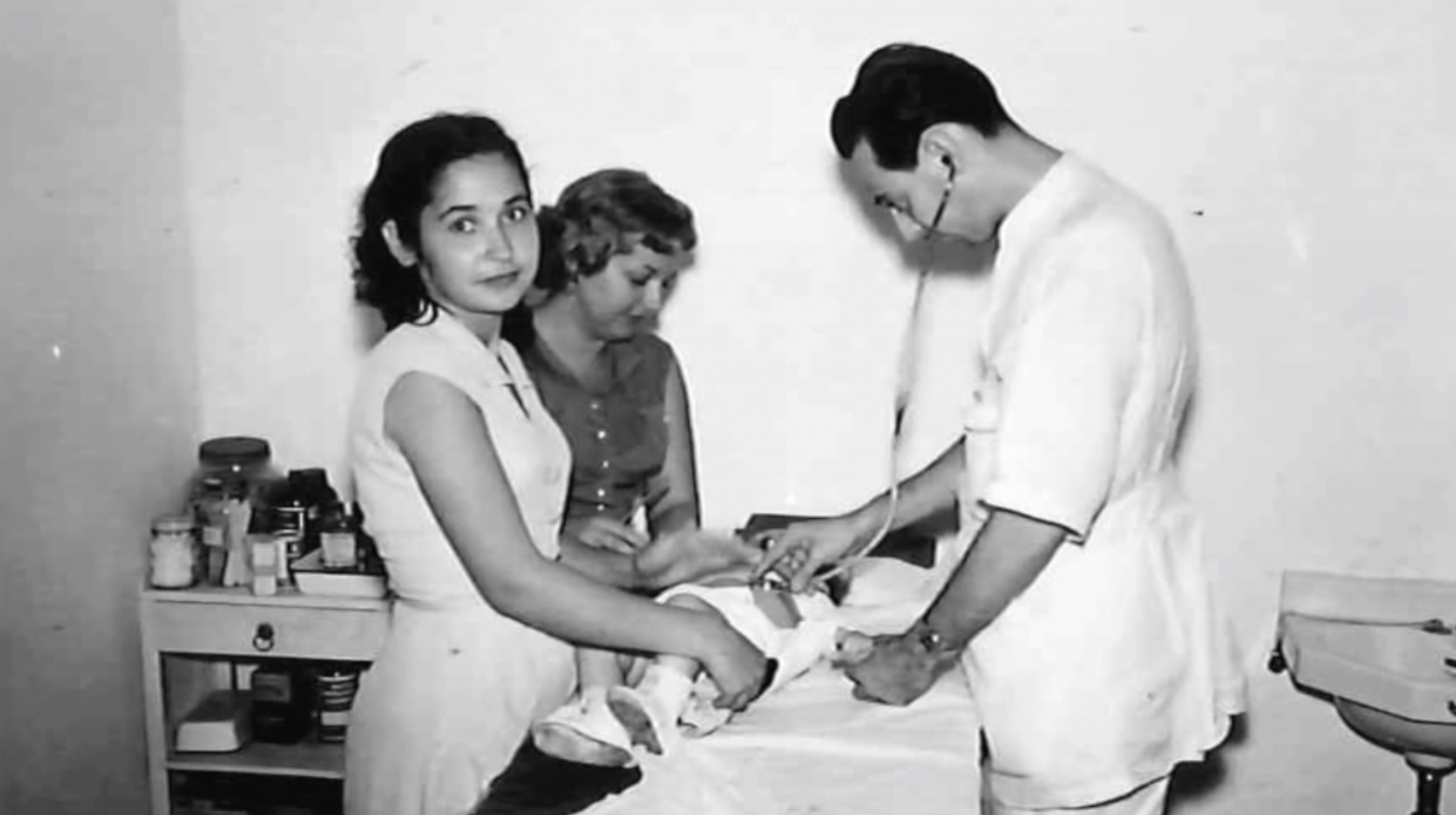
Each morning, Richard and fellow volunteer Alan Whanger worked alongside Hazel Stroud in the clinic. Her reputation preceded her. In the six years since the clinic’s opening, her diplomatic handling of local officials and tireless dedication had helped reduce child mortality in Mayarí from 26 percent to 4 percent. The Strouds had developed a system that involved treating what they could during the week and referring the most serious cases to a local doctor who visited for half a day each Wednesday.
Richard and Alan helped with whatever was needed. They carried water, cleaned instruments, organized supplies, and offered comfort to patients who waited in long, humid lines for their turn. Working under Hazel’s direction, they began to see how much of the work depended on steadiness, attention, and the willingness to return each day, even when exhaustion set in, and the line kept growing.
By midmorning, the clinic overflowed with children weakened by malnutrition and illnesses tied to the same river that both nourished and poisoned their lives. The air inside was thick with the sour smell of unwashed bodies. Babies wailed as mothers rocked them, their cries blending with soft, urgent prayers. At the center of it all was Myrna, a young nurse’s aide with little formal medical training but extraordinary skill. Her hands moved quickly, wrapping bandages, measuring doses, and checking for signs of dehydration.
An idea began to take root. What if we could multiply these hands?
“Boil the water,” she told a mother, her tone firm but kind. “Every time. No exceptions.” The woman nodded, clutching her child tighter. Myrna wiped her forehead with the back of her hand and moved to the next patient with practiced ease. Richard marveled at her quiet efficiency. How does she do it? he wondered. She moved from patient to patient with a focus that felt beyond him. He found himself watching more than helping, unsure of what he could actually contribute.
The clinic buzzed with urgency. The lines stretched longer than usual, the air thick with the metallic tang of sweat and heat. A single fan whirred unevenly, barely cutting through the stillness. Water trickled steadily into basins, punctuated by the occasional rise of a mother’s voice in rapid Spanish. Her words, heavy with desperation, sliced through the room like a blade.

A young woman stepped forward, her baby limp in her arms. Richard’s eyes went first to the child’s face. Dry lips. Hollowed cheeks. Barely responsive. He had seen enough in the past week to know what that meant. Dehydration. Maybe worse. Myrna was already reaching for a basin, her voice calm, her touch efficient. Richard hovered nearby, uncertain whether to stay or make room. What if she hands the child to me? What would I do?
But it was the next child who would stay with him forever. A boy, maybe eleven months old, slid from his mother’s grasp and dropped to the floor with surprising speed. He moved across the warped wooden planks on all fours, his thin shirt tugging up as he scooted forward. Then Richard saw it: Something pale trailing behind him. At first it looked like a strip of cloth, something he had dragged from his mother’s bag. But it kept going. Long. Ribbon-like. Glinting faintly in the clinic’s dim light. Almost seven feet of it.
That is coming from him, Richard realized, his breath catching. He could not move. Could not speak. The floor tilted slightly under his feet.
Then, as if the world were not already strange enough, another shape slipped free. A thick worm, round and pale, landed near Richard’s boot and curled in on itself.
He took a step back, instinct overriding reason. What is this? What am I looking at? His stomach turned, but he forced himself to keep still. Myrna was already there, wiping the boy down, speaking softly to the mother. No panic. Just motion. Practiced and sure.
Richard gripped the edge of a nearby table, steadying himself. Do not faint. Do not be useless. Just stay on your feet. But the image stayed with him. The boy. The ribbon. The worm. It etched itself into his mind before he could look away. Myrna gave the boy what medicines she could. But something in her eyes caught Richard’s attention. A flicker of doubt. The kind that did not show in her hands but told him everything. This might not be enough.
Weeks later, when the mother returned with her older daughter suffering from measles complications, Richard saw her head drop at the mention of her son. All he could hear were her tears.
At night, lying on his cot in the stifling heat, Richard could not shake the images. The boy. The ribbon. The worm. The look in the mother’s eyes when she returned alone. So much of this is preventable, he thought, staring into the darkness. But how? One doctor and one nurse can only do so much. He pictured Myrna back at the clinic, her hands moving with quiet confidence, managing cases that would rattle trained physicians. Three months of training? Maybe six? And she was saving lives.
An idea began to take root. What if we could multiply these hands? Train more people like Myrna?

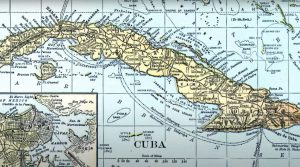
The question stayed with him in the days that followed, even as the team left the clinic behind and made their way into the mountains. The sun beat down mercilessly as Richard and the other volunteers made their way up the mountain road to Guayabo. Twenty-two miles from Mayarí, their destination felt like another world entirely. The jeep groaned beneath them, its tires spinning in red mud as they forded yet another stream. Sixty miles from Guantanamo Bay, Richard thought, wiping sweat from his eyes, but it might as well be on another planet.
His hands, soft from years at the piano, had grown calloused from swinging hammers and hauling lumber. They were building a house for a Cuban clergyman who would serve this isolated mountain community. The work was backbreaking, but Richard welcomed it. Physical exhaustion helped quiet the thoughts that kept him awake at night—the faces of patients he couldn’t help, the memory of that tapeworm writhing across the clinic floor.
As he worked, his mind often drifted back to that humiliating moment in Miami, where police officers had thrown him to the pavement for refusing to use the “colored” waiting room. The sting of those words—“put your ass in the gutter where you belong”—still burned. But now, standing on this mountainside, watching the clouds cast shadows across the valley below, those prejudices seemed absurd in the face of such widespread human suffering. Disease doesn’t care what color you are, he thought, driving another nail home. Pain doesn’t check your papers before it visits.
The Strouds moved through their days with quiet purpose, helping people grow gardens, establish bartering networks, and treat their ailments. They weren’t just dispensing medicine; they were strengthening the fabric of the community itself. This is what real mission work looks like, Richard realized. Not just preaching, but meeting people where they are, helping them help themselves.
Each evening, as darkness settled over the mountains, Richard sat on the steps of the nearly finished house, letting the cool air wash over him. The transformation happening within him felt as vast as the landscape before him. Music, which had once seemed his destiny, now felt like a prelude to something greater. But how can I be a doctor when I can’t even handle blood? The question nagged at him, even as his determination grew.
As his days in Cuba wound down, he thought of Myrna, how she moved through the clinic with such assurance despite her limited training. If she could overcome whatever fears she’d had, so could he. The memory of her steady hands would become symbolic, something to hold onto as he imagined a future so different from what he’d planned only a year or so earlier. This is what I’m meant to do, he thought. Not just treat patients but empower others to serve.
“We all learn that we have to pay our rent for the privilege of living,” she said softly, her voice carrying hard-earned wisdom through this familiar aphorism. “Living here, living at this time.”
The familiar walls of his Norwalk home felt strangely foreign, as though Cuba had shifted his entire world. At night, the silence of his bedroom was deafening. The absence of the chorus of tropical insects made his memories all the louder. The images wouldn’t fade: the tapeworm-afflicted child, Myrna’s steady hands, the endless line of patients.
Mabel noticed the change in her son immediately. She watched him push food around his plate at dinner, his mind clearly somewhere else. Her years of cleaning houses to pay for his surgeries, her decision to send him to West Virginia for his health—every sacrifice had been aimed at giving him a chance to have a better life. Now she saw him wrestling with something profound, something that went beyond career choices.
One evening, as the kitchen filled with the soft light of sunset, she set aside her dish towel and sat across from him. The wooden table between them held years of family discussions, victories, and sorrows. My baby’s not a baby anymore, she thought, seeing the man emerging in her youngest son’s troubled expression.
“We all learn that we have to pay our rent for the privilege of living,” she said softly, her voice carrying hard-earned wisdom through this familiar aphorism. “Living here, living at this time.”
Richard looked up, struck by her words, finding a new way to apply their meaning. The fork he’d been fidgeting with stilled in his hand.
“Sometimes we learn it late,” she continued. “Some people never learn that they have that obligation to God and His people.” Her eyes softened with pride as she studied his face. “I’m happy to see you thinking about it while you have plenty of time to figure out how you’re going to pay YOUR rent for living.”
She understands, Richard realized, feeling the tension in his shoulders ease for the first time since returning home. Her words seemed to crystallize everything he’d been feeling since Cuba— – the inadequacy of his former dreams in the face of such profound need, the pull toward something larger than himself.
“You’re gonna be happier than most,” she continued, reaching across the table to squeeze his hand, “probably be harder working than most, and for things that can’t be measured in terms of money.” Her voice caught slightly. “I’m gonna be happy to see the man you’re gonna be.”
Later that week, back again in Manny Lee’s (Pop’s) study, Richard found himself surrounded by the familiar scent of pipe tobacco and the wall of books surrounding his desk. He described the summer—the brutal poverty, the endless line of patients, the quiet heroism of people like Myrna. His words came out cautiously at first, as though speaking them aloud might diminish their weight. But Pop listened intently, his chin resting on his hand as he puffed his pipe.
When Richard finished, Pop leaned back in his chair, exhaling a plume of smoke that swirled lazily toward the ceiling. “So,” he said, his voice low and thoughtful, “you went all the way to Cuba to learn a lesson you probably didn’t realize you needed.”
Richard frowned slightly, unsure where this was going. “What do you mean?”
Pop tapped the pipe gently against his ashtray, knocking out the spent tobacco. “Life isn’t about solving every problem, kid. It’s about choosing which ones you can live with and which ones you can’t. It sounds to me like you’ve found one of the latter.”
Richard sat quietly, letting Pop’s words settle over him.
“Most people,” Pop continued, “walk through life with their eyes half-closed. They see pain, injustice, need—and they look the other way, because it’s easier. But not you. You saw it, and you didn’t turn away. That’s no small thing.”
“I just… I didn’t do enough,” Richard muttered, his voice cracking slightly.
Pop leaned forward, fixing him with a sharp gaze. “Enough? Enough for what? For the whole world? Of course you didn’t. But you didn’t stand still, either. You stepped into something bigger than yourself. And now you’ve got a choice to make. Are you going to keep stepping forward, or are you going to let fear stop you?”
Richard didn’t respond, but the knot in his chest began to loosen, just a little.
Pop’s tone softened. “What you saw, what you did—it matters. Maybe more than you know. And maybe that’s why you brought it all home with you. Because now, it’s not just something you saw. It’s part of who you are.”
Richard looked at him, unsure how to respond. But deep down, he knew Pop was right. Those moments in Cuba, those faces and voices—they were part of him now, woven into the fabric of his being.
Pop leaned back, his gaze drifting to the big plate glass window. He stared out for a long moment, then turned back to Richard with a small smile tugging at the corner of his mouth. “You’re a good kid, Richard,” he said softly. “Don’t let this world convince you otherwise. The world’s got plenty of cynics. It doesn’t need you to be one of them.”
The room fell quiet, the faint crackle of embers in Pop’s pipe filling the silence. Richard sat back, his eyes drifting to the spines of books lining the shelves behind Pop. Each title seemed to whisper its own question: What will you do now?
Between Mabel’s faith and Pop’s steady encouragement, the haze in Richard’s mind began to lift. He didn’t have all the answers yet, but the path ahead felt clearer.
The diversity that had always made Howard unique now carried deeper significance. Richard found himself drawn to conversations with medical students from Nigeria, Ghana, and the Caribbean. We’re all fighting the same battle, he realized.
As he prepared to return to Howard University that fall, Pop’s words lingered in Richard’s mind. The path ahead felt daunting, but his resolve had never been clearer. He arrived on campus with a renewed sense of purpose, determined to reshape his future.
With this newfound clarity, Richard switched his major from music to biology and threw himself into his studies with relentless determination. Evenings that he might once have spent playing the piano were now devoted to long hours in the library, poring over textbooks and struggling to master the intricate vocabulary of science. His fingers, once so nimble on the keys, now wrapped awkwardly around a pencil as he sketched diagrams of cellular structures and scribbled chemical formulas. The work didn’t come easily, but he pushed himself forward, determined to overcome every challenge.
The diversity that had always made Howard unique now carried deeper significance for Richard. In the cafeteria, Richard found himself drawn to conversations with medical students from Nigeria, Ghana, and the Caribbean. Their stories of healthcare challenges in their home countries echoed what he’d witnessed in Cuba. We’re all fighting the same battle, he realized, as he listened to a Jamaican student describe the toll of parasitic diseases in his village. These exchanges deepened Richard’s understanding of how interconnected the world’s struggles for better health were—and how much work remained to be done.
That sense of purpose followed him in September 1952, when nineteen-year-old Richard traveled to Boston for the General Convention of the Episcopal Church. Inside the grand hall, hope swelled in his chest as he watched the predominantly white delegates pass a resolution declaring “Christ’s teaching is incompatible with every form of discrimination based on color or race.” The words carried the weight of possibility, taking a stand almost two years before the Supreme Court’s landmark Brown v. Board of Education ruling. This is what progress looks like, Richard thought, his optimism lifting with the moment.

Amid the excitement, Richard had the chance to connect with an influential church leader, Dr. Kendall Emerson, who chaired the Harvard Medical School admissions committee. He had been introduced as the brother of Father Sewall Emerson, the beloved rector of St. Paul’s Episcopal Church back home in Norwalk. Father Emerson had been a cornerstone of Richard’s adolescence, guiding him musically and spiritually. Under his mentorship, St. Paul’s had become a refuge where Richard felt valued and uplifted. Now, meeting Father Emerson’s brother—someone who seemed equally kind and encouraging—felt like a continuation of that trust.
Dr. Emerson listened closely as Richard described his dream of becoming a medical missionary. He seemed genuinely moved. “The world needs more young men like you,” he said, shaking Richard’s hand. The affirmation lit a fire inside Richard, filling him with renewed determination to pursue his medical studies. He left Boston feeling certain that his path was becoming clearer.
However, the academic transformation ahead wouldn’t be easy. His earlier semesters of half-hearted study cast long shadows over his GPA. Organic chemistry proved particularly daunting. The complex molecular structures seemed to mock him, no matter how hard he tried. I can’t fail this, he thought, staring at yet another disappointing quiz grade. Hours of extra study in the library only seemed to magnify his frustration. No matter how much time he spent trying to master the material, his grades didn’t improve.
By the end of the semester, his grade hovered at a D. This was far below what he needed to move forward. Desperate, Richard found himself in Dr. Ferguson’s office. The organic chemistry professor was a towering presence at Howard, known for his rigorous expectations and intimidating demeanor. His lectures often left the classroom in awed silence, but they hadn’t been enough to keep Richard from falling behind.
Sitting across from him, Richard gripped the grade report in his hands, his palms damp with sweat. “Dr. Ferguson,” he began, his voice shaking slightly, “I know I haven’t performed as well as I should, but I’m asking for a chance. If you could raise my grade to a C, I promise I’ll do everything I can to prove myself.”
Dr. Ferguson leaned back in his chair, his eyes narrowing as he studied Richard. “You know I don’t hand out grades, Richard,” he said finally, his tone measured. “You earn them.”
“I understand that, sir,” Richard replied, his heart pounding. “But I’ve learned my lesson. I know what’s at stake, and I’m ready to do the work. This grade—it’s not just a letter. It’s my chance to become the doctor I want to be. Without it, I can’t move forward.”
Silence stretched between them. The moment pressed heavily on Richard’s chest. Finally, Dr. Ferguson spoke, his voice firm but not unkind. “I’ll raise your grade to a C. But remember, what happens next is up to you. If you’re serious about medical school, you’ll need to prove it.”
Relief washed over Richard as he left Dr. Ferguson’s office, but it was tempered by the knowledge that this wasn’t the end of the battle—it was only the beginning. I won’t let this chance go to waste, he vowed. The C was a lifeline, but the road ahead remained steep. His medical school applications would need to overcome the blemishes on his academic record. Late into the night, Richard crafted his medical school application essays, pouring out his heart about his purpose, his transformative experiences, and his desire to serve communities in need.
Weeks later, the first response arrived. Richard held the envelope from Howard University in his hands, his heart pounding as he carefully tore it open. His eyes scanned the page until the words jumped out at him: “We are pleased to offer you admission.” A wide grin spread across his face as relief and joy surged through him. They had looked beyond the grades. They had believed in him. He read the letter again, savoring the victory.
Days later, a second envelope arrived—this one from Meharry Medical College, the historically Black medical school located in Nashville. The familiar anticipation gripped him as he opened it, his pulse quickening. Another acceptance. A wave of relief swept through him, followed by a flicker of pride. Two medical schools believed in his mission, in his potential. They understand what’s possible, he thought, reviewing both letters again.
Then, there was Harvard. The letterhead was unmistakable. Richard held the envelope with trembling hands, his mind flashing back to the Episcopal Church Convention in Boston two years earlier. He could still hear Dr. Kendall Emerson’s voice, warm and encouraging as they’d discussed his dream of becoming a medical missionary. “The world needs more young men like you,” Dr. Emerson had said as he handed Richard the Harvard application with a smile. This is it, Richard thought as he carefully opened the envelope. They’ll see my potential, too.
His eyes moved over the words on the page, searching for the acceptance he had hoped for. Instead, a single phrase stopped him cold: “Not our year for a Negro.” The words burned into his mind, raw and undeniable. The breath caught in his throat as reality hit him. No mention of his grades or qualifications—just this.

The shock froze him in place, the letter still trembling in his hands, though now for new reasons. He read it again, as if doing so might somehow erase the phrase from the page. But there it was, staring back at him. His eyes drifted to the bottom of the letter, where the signature mocked him: Dr. Kendall Emerson. The same man who had spoken so enthusiastically about his future at the convention. The same man who had smiled warmly as he handed over the application. And now, the man whose hands had written this rejection.
The letter felt like two blows at once—one to his faith in the man who had encouraged him and the other to the institutions he had hoped would rise above prejudice. Harvard Medical School, a beacon of supposed progress; the Episcopal Church, which had so proudly condemned discrimination. And yet, both stood together to uphold the very barriers they claimed to oppose. Dr. Emerson wasn’t just a gatekeeper—he was proof that even within institutions of faith and knowledge, prejudice still ruled.
The rejection letter from Harvard might have closed one door, but Richard refused to let it define him. If anything, the blow only deepened his resolve, sharpening his focus on the path that lay ahead. As he began to navigate the demanding challenges of medical school, he would find himself returning again and again to his vivid memories of Cuba—the clinic, the child, the helplessness of that moment. The vision that had carried him this far—to multiply his hands a thousandfold—remained unshaken, even as life’s obstacles seemed determined to test it. Those memories became a quiet fire within him, pulling him toward the world of tropical medicine and the neglected diseases that plagued vulnerable communities. Harvard had refused him, but Howard had not, and it was there that he would carry his dreams forward.
Richard’s pencil moved with careful precision across the page, each stroke capturing the sinuous curves of a parasite’s life cycle. The quiet scratch of graphite on paper filled the late-night silence of the Howard Medical School library. These aren’t just diagrams, he thought, shading in the complex stages of larval development. These are the enemies we’re fighting. The parasites weren’t abstract concepts to him—they were silent invaders destroying lives, families, communities.
During lectures, he found himself scribbling questions in the margins of his notes: How do they really spread in the poorest communities? What actually stops them? What could we do differently if we had more trained eyes in the field? Each lecture brought new insights, new possibilities. There are answers here, he thought, answers that could help people who’ve never seen a doctor. Every study session felt like he was gathering tools he would need for the work ahead.
That growing clarity of purpose carried him as graduation drew near. With his vision sharpened by years of study and his resolve unshaken, Richard approached the Episcopal Church’s Missionary Board once again. “I want to multiply my hands a thousand–fold,” he told them, “to expand the reach of healthcare by training more than the hands of doctors,” his voice steady with conviction. The board members listened, nodding, but behind their thoughtful expressions registered an unease that Richard couldn’t ignore.
At home, the source of their hesitation weighed on him. Parbattee, his wife and fellow Howard graduate, had been battling an unexplained illness for months. Subtle symptoms—a lingering fatigue, vague discomfort—had grown into deeper concern. Elevated eosinophils in her bloodwork hinted at a parasitic infection, but no one could pinpoint the cause. This uncertainty gave the Missionary Board pause. They were unwilling to send a missionary’s wife with an undiagnosed condition into the field. For Richard, it was an unexpected roadblock, one that delayed his dreams of immediate deployment indefinitely.
Late one night, sitting at the small desk in their cramped apartment, Richard’s mind began connecting dots. Elevated eosinophils. A subtropical origin. Parbattee’s symptoms—hinting at something deeper—churned in his thoughts. He flipped through textbooks, his pen scratching feverishly as he scribbled notes, cross-referencing her symptoms with what he had learned in class. Could it be filariasis? The idea hung in his mind, but he needed more.
The next day, he dove deeper, consulting articles and journals on tropical diseases in the medical library, his growing certainty sharpening with each page. But certainty in theory wasn’t enough. Richard approached one of his professors for advice, gathering a fresh round of bloodwork and examining Parbattee’s eosinophil levels with a microscope himself. The telltale markers were there, aligning with everything he had studied. This fits perfectly, he thought, his pulse quickening. Maybe too perfectly? He needed validation from an expert.
Armed with his findings, Richard sought out Dr. Henry Beye, the Director of the Parasitic Disease Service at the National Institutes of Health (NIH) in Bethesda, Maryland. Presenting his case with cautious excitement, he laid out the evidence step by step: the clinical symptoms, the data he had gathered, and the connections to her subtropical origins. Dr. Beye leaned back, his smile breaking across his face. “Your diagnosis is spot on,” he said to Richard, the praise landing like a jolt of electricity. “Not many med students would have pieced this together so precisely.”
That moment marked a turning point. Diagnosing Parbattee was a personal victory, but more importantly, it meant she could finally receive proper treatment. With the correct diagnosis confirmed, Parbattee began the appropriate medication regimen for filariasis. Over the following weeks, her symptoms gradually resolved—the lingering fatigue that had plagued her for months began to lift, and the discomfort that had caused them both such worry finally subsided.
The successful diagnosis and treatment also became a breakthrough that cemented Richard’s growing expertise in tropical medicine.
Under Beye’s mentorship, Richard began working in the Laboratory of Tropical Diseases at the National Institute of Allergy and Infectious Diseases (NIAID). By 1955, he was balancing rigorous medical studies with groundbreaking research into Wuchereria bancrofti, the parasite responsible for filariasis. Each hour in the lab deepened his understanding of how neglected diseases devastated vulnerable populations, sharpening his focus on the urgent need for public health interventions.
Coming upon what had seemed like a closed door—the Missionary Board’s hesitation—had instead led Richard to open another. Maybe this is how I start multiplying those hands, he thought, pouring himself into the work.
His first assignment with Beye yielded surprising insights. Tasked with identifying filariasis cases in Washington, D.C., Richard turned to the Caribbean student community at Howard. Blood samples revealed that some students carried parasite loads so high that mosquitoes feeding on them died under the strain. It’s like nature created its own checkpoint, he realized, the implications unfolding in his mind. The very thing that makes them sick might also protect their communities.
The discovery gained attention, and Richard’s findings were featured in Beye’s publications. By 1956, his reputation had grown, leading to a historic honor: Richard became the first medical student commissioned into the U.S. Public Health Service. The appointment aligned perfectly with his drive to merge science with service, opening new doors for his growing mission.
Not long after, another opportunity arose—an offer to direct the Filariasis Control Commission in the French Society Islands. “Tahiti,,” Richard thought, the word conjuring vivid images of turquoise waters and sunlit beaches. But when he brought the offer to Dr. Beye, the elder doctor’s guidance was clear: “Complete your medical training first.” The decision weighed on him, but he knew the wisdom in it. With a deep breath, Richard set aside the dream of Tahiti and redoubled his focus, each step preparing him for the larger battles ahead.
Richard’s relentless dedication soon caught the attention of other prominent figures in the field, including Dr. Hildrus Poindexter, a trailblazing African American leader in the U.S. Public Health Service.

In Dr. Poindexter, Richard found more than a mentor—he found an exemplar of excellence in the face of systemic prejudice. A malariologist and tropical disease expert, Poindexter had been indispensable during World War II. “General MacArthur told me he wouldn’t set foot in the Philippines without my help,” Poindexter recounted one day. “He knew malaria would’ve killed more troops than the enemy.”
Dr. Poindexter’s expertise had earned him four major battle stars and the rank of Lieutenant Colonel. His contributions had saved literally thousands of lives. Yet even with his unparalleled achievements, Poindexter had been denied leadership roles at the National Institutes of Health solely because of his race.
“The system isn’t fair,” he told Richard during one of their many conversations. “And it may never be. But you don’t stop. You learn to work within it. You change it from the inside.”
Richard felt the weight of those words. The sting of Harvard’s rejection still lingered, a reminder of how entrenched discrimination was, even in the most progressive spaces. But like Dr. Poindexter, he refused to let systemic injustice limit him. Instead, it fueled his determination. I’ll push forward, Richard resolved. I’ll find new ways to serve.
After graduating from Howard Medical School in 1957, Dr. Richard Smith headed west to Seattle for his internship at the Public Health Service Hospital. The endless rain mirrored his mood as he wrestled with his frustrated missionary ambitions. But the experience would ultimately serve to broaden his understanding of disease patterns and the connections between public health and prevention.
A residency in public health and preventive medicine with the Los Angeles City Health Department followed, exposing him to the intricacies of community health systems. By 1959, he had decided to return to school to pursue a Master’s in Public Health at Columbia University in New York.

The nurses at the U.S. Public Health Service Hospital on Staten Island had seen many birth announcements, but nothing quite like the one Dr. Richard Smith was crafting at his wife’s bedside. Parbattee, exhausted but smiling, watched her husband hunched over a notepad, scribbling and crossing lines out with the intensity he usually reserved for medical charts.
“Listen to this,” he said, clearing his throat with mock formality before reading aloud:
The Smith Production Company
New York City
Announces their new 1959 model:
Rik Balakvishma
6 pounds, 11 ounces
Designer and chief engineer: Dr. Richard A. Smith
Production Manager: Parbatee B. Smith
Technical Assistant: Dr. John Dorson, New York City
In-the-hangar consultant: Dr. LeRoy Weeks, Los Angeles
Assembly Plant: U.S. Public Health Service Hospital, Staten Island, NYC
November 7th, 1959
Model released at 2:29 a.m.
Two lung power
Free squealing
Streamlined body
Hair-lined non-convertible top
Economical feed
External plumbing
Water cooled exhaust
Changeable seat covers
The management assures the public that there will be no more models during the balance of the year.
Parbattee burst into laughter, the sound mixing with baby Rik’s soft breathing. “Richard, you cannot possibly send that to people.”
“Why not?” he grinned, already imagining the reactions. “It’s accurate. Completely factual. And it’ll give people a smile.”
Within days, the announcement appeared in newspapers from Los Angeles to New York, bringing chuckles to colleagues who recognized Smith’s irreverent humor even when announcing a new baby.

In 1960, Dr. Smith returned to Seattle to begin work as an epidemiologist with the Washington State Department of Health. His opening investigation appeared routine: a typhoid outbreak linked to a church picnic. “Be sure to see if a grandmother made the potato salad,” his supervisor said. The comment struck Dr. Smith as oddly specific, but as he drove east across the state, it kept echoing in his mind.
He began the slow work of interviews, tracing what each person had eaten and when symptoms began. One dish surfaced again and again: homemade potato salad, prepared by an elderly woman who felt perfectly healthy. A grandmother, indeed. Treated decades earlier and symptom-free ever since, she was a textbook typhoid carrier, never knowing she could still infect others.
She’d carried the bacteria for twenty-five years without knowing.
The case taught Dr. Smith something he had not fully grasped before: Public health was not just about treatment. It required prevention, vigilance, and the recognition that one overlooked detail could endanger an entire community.
During his residency, Dr. Smith investigated outbreaks of rabies, encephalitis, and botulism, but this case felt different. Each mystery became a test of logic and patience, requiring more than medical knowledge. It called for the ability to see the system as a whole.
He realized this was where his strength lay: recognizing patterns and understanding how things connect.
He could not yet know how crucial that mindset would become. But the typhoid case and the quiet revelations it sparked marked a turning point. Medicine was no longer just about treating illness; it was about seeing how one person’s health could quietly shape the well-being of many.
When the Church finally responded, they completely missed the point. Their offer—a position at St. Luke’s Hospital in Manila, Philippines—represented exactly the kind of traditional one-doctor approach Dr. Smith was trying to move beyond.
Even as Richard pursued his career with the U.S. Public Health Service, his dream of what he would come to refer to as “multiplying his hands” through medical missions hadn’t dimmed.
Dr. Smith had written a proposal to his Church’s board describing how he saw healthcare in the future, especially in the developing world. He called it Project 2-C, naming it for Christ’s Second Great Commandment—”Love thy neighbor as thyself” in the Gospel of Matthew (Matt. 22:39). The proposal he crafted drew deeply on his Cuban experience, outlining a bold plan to train “quasi-doctors” who could provide care to various populations within a country. The proposal outlined a bold vision: teams of twelve health professionals and their families who would commit to a revolutionary venture. These teams would travel into a series of countries, spending a few years training local providers before moving on to new areas of need. Most importantly, they wouldn’t just treat patients—they would train trainers, creating self-sustaining systems of care that would continue long after the teams departed.
When the Church finally responded, they completely missed the point. Their offer—a position at St. Luke’s Hospital in Manila, Philippines—represented exactly the kind of traditional one-doctor approach Richard was trying to move beyond.
“I want to train people—I don’t want to be running a clinic,” he told them firmly, the faces of Cuba’s suffering masses still vivid in his memory. One doctor can only do so much, he thought. But a doctor who trains others…
His college chaplain and mentor, Reverend John Burgess, recognized Dr. Smith’s vision for taking medical missions to an entirely new level of effectiveness. When the rejection came from the board in New York, Burgess pursed his lips and said, “I’m going to take this to a higher authority.”

It was during this period of uncertainty that Dr. Smith accepted a new position in Tuba City, Arizona. The bright beauty of red rock country offered a stark contrast to Seattle’s grey skies and rain as he took up his post as Field Medical Officer at the U.S. Public Health Service Indian Hospital in July 1961.
But his time there would be brief—a flyer about the Peace Corps healthcare program caught his eye, leading to that fateful October meeting with Sargent Shriver where his next path became clear: Nigeria.
Meanwhile, Burgess had set his own plan in motion. He arranged to be on the same plane as the Archbishop of Canterbury, flying from London to New Delhi for the 1961 World Council of Churches meeting. During that flight, Burgess presented Dr. Smith’s 2-C proposal, persuading the Archbishop to champion it before the Council.
As Dr. Smith prepared for his departure to Nigeria, Burgess’s audacious plan was unfolding halfway around the world. But in December, word came from New Delhi—the World Council of Churches, like the Episcopal Church before it, had deemed the proposal too radical.
This time, though, the rejection felt different. Richard was already in Nigeria, discovering new ways to implement his vision through the Peace Corps. Maybe this is how it was meant to be, he thought. Sometimes the most direct path isn’t the right one.