2026-2027 MEDEX Application Cycle Is Now Open
Applications will be accepted May 1 - October 1, 2026 for June 2027 matriculation.
Prospective applicants should review the updated admissions criteria on the Applicants page before applying.


A MEDEX Magazine Series

The autumn wind rattled the windows of the small house in Norwalk, Connecticut, carrying with it the pungent smell of coal smoke from neighboring chimneys. It was October 13th, 1932. Inside, a single lamp cast weak light against the gathering dusk. In that dimly lit room, made sparse by the times, the newborn Richard Alfred Smith drew his first breath. His mother Mabel’s hands, rough from scrubbing other people’s floors, trembled as she cradled him. By the bed, his father Julius stood upright in his starched butler’s uniform, as a mix of pride and worry flickered across his face. Another mouth to feed, Julius thought, watching Julius Jr., nearly five, peer wide-eyed at his new baby brother. The radio in the corner crackled with news of bank failures and bread lines, but in this moment, their small universe centered on this new life, full of possibility despite the weight of the Great Depression pressing down on them all.
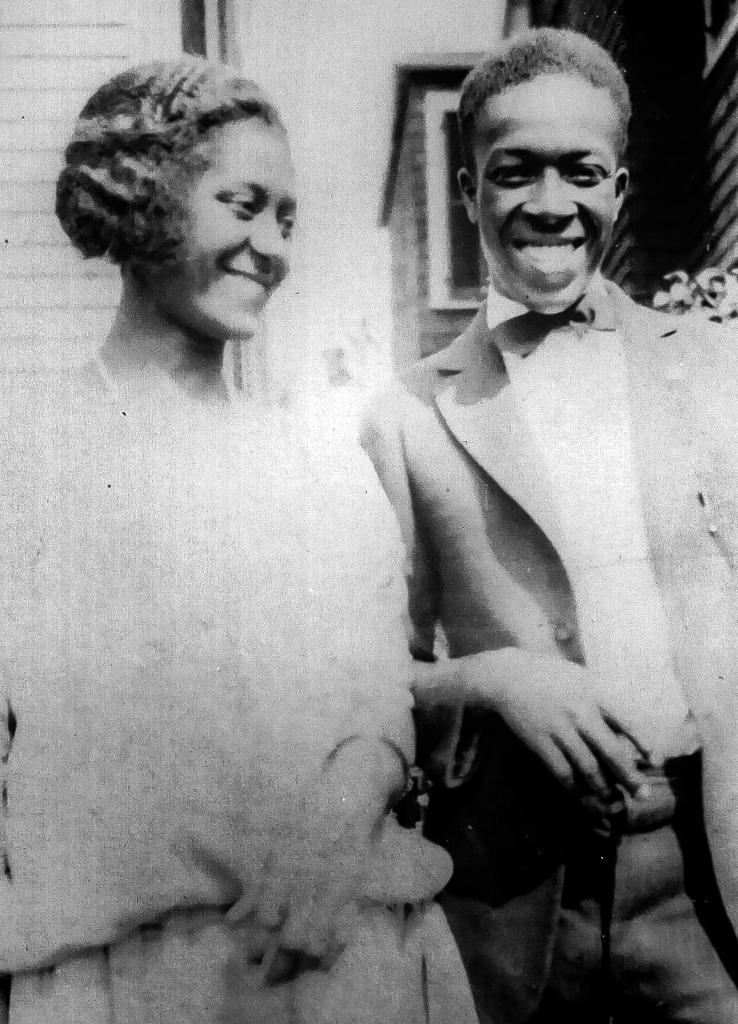
Richard was born with clubfoot, a condition that twisted his right foot backward. For his parents, this physical challenge seemed insurmountable given their limited means during the depths of the Great Depression when even putting food on the table required careful calculation. Mabel would often sit by his crib in the evening, gently stroking his misshapen foot, her face a mask of quiet determination despite the worry that creased her brow.
Then, when Richard was just five months old, tragedy struck in a way that would forever alter the course of his life. His father, Julius, had been complaining of chest pains for several days but had dismissed them. He couldn’t miss work and the wages his family desperately needed. One cold February morning, Julius collapsed while polishing silver at the home where he served as butler. He died suddenly of a heart attack at the age of thirty-two, leaving Mabel to raise two young boys alone.
In the weeks that followed, Mabel moved through their modest home like a shadow, grief weighing heavily on her shoulders. Five-year-old Julius Jr. couldn’t understand why his father wasn’t coming home, while infant Richard would grow up with no memory of the man whose name he carried. Yet from this profound heartbreak emerged an unexpected silver lining. Julius had maintained a small life insurance policy despite their financial hardships—a decision that now seemed almost prophetic. The meager payout wasn’t enough to secure the family’s future, but it provided the funds necessary for Richard to receive life-changing treatments to fix his club foot.
The lengthy train rides from Norwalk to New York City’s Hospital for the Ruptured and Crippled became a ritual for mother and son, their lives measured in the rhythmic clatter of train wheels and the changing seasons outside the window. How many more times? Mabel would wonder silently, only too aware of the dwindling dollars in her purse. Three-year-old Richard watched her face reflected in the window, learning to read the worry that tightened around her eyes even as her voice remained steady with encouragement.
The Hospital for the Ruptured and Crippled was built in the 1860s when the streets of New York overflowed with desperate families and their disabled children, when mothers had carried their crippled young through the streets seeking help that didn’t exist. Now, in the 1930s, Richard and Mabel joined other families climbing the worn stone steps to the hospital, carrying their own hopes and fears.

Don’t cry, don’t cry, Richard would tell himself as doctors manipulated his foot, fighting back the tears. The hospital’s clinical coldness surrounded him. The squeak of rubber-soled shoes on polished floors, the metallic clink of instruments, the hushed professional voices discussing his case as though he weren’t there. Through it all, his mother’s voice remained a constant source of encouragement.
They made this pilgrimage for three years. Each cast change left its mark. The doctor would cut away the old plaster, revealing skin gone ashen and flaky underneath. Then came the manipulation, stretching the resistant tendons and ligaments a few crucial degrees further before once again wrapping the damp, cool plaster bandages around his leg from toes to knee. The heavy plaster encasing his leg, the maddening itch that couldn’t be scratched, the faces of other children in waiting rooms who had it worse. Richard learned to read their parents’ expressions too—the same mix of determination and worry he saw in his mother, the same careful counting of coins, the same fierce hope that somehow, all of this would be worth it.
When the final cast was removed, Richard was relieved. But his journey was far from over. The special shoes arrived, made of stiff, unyielding leather, their high-topped design molded to cup his feet in place. A metal bar fastened between them, heel to heel, holding both feet at an outward angle. Only his right foot had been clubbed, but the bar linked both shoes together, using the healthy foot to guide the corrected one and prevent it from twisting back. At night, the bar locked his ankles in position, making it nearly impossible to turn over in bed. During the day, he wore a different pair just as rigid, meant to train his posture and reshape his gait. Each step thudded against the floor, louder than it should have been. Other children noticed. Some stared. A few asked why his shoes looked so strange. I’ll always be the boy with the twisted foot, he thought, shame rising in his chest as he tried to tuck the shoes beneath the cuffs of his pants.
And yet through it all, Mabel Smith refused to let therapy define her son’s world. One day, as she watched Richard work through his prescribed exercises, curling his toes, rotating his ankle, and trying to pick up marbles with his foot, an idea began to form. The same motions that built strength in his healing foot could become something beautiful.
“Richard,” she said that evening, setting aside the mending in her lap, “how would you feel about taking dancing lessons?”
He looked up from the floor, where he had been rolling an empty spool of thread across the rug. “Dancing? But I got these on.” He pointed to his shoes, still stiff and heavy around his feet. They were the daytime pair, no bar between them, but no less awkward to wear.
“That’s why I think it could help,” she said. “The doctor says your feet need to stay strong.”
She rested her hands in her lap. “You remember that movie we saw at church? The one with the man tapping his feet so fast they sounded like rain? I think his name was Mr. Bojangles.”
Richard nodded slowly. “He danced really good.”
“He sure did. And some of those moves looked just like the ones you already do with your toes and ankles. I thought maybe dancing could help. And maybe it would be fun too.”
Tap dancing lessons became their new routine. It was medicine disguised as art. Each step was therapy, each shuffle, ball-change, and heel tap intended to build the muscles his surgeons had corrected. The metal tap plates attached to the heels added weight that strengthened his ankles. The precise positioning required of his feet to perform the various dance moves demanded physical control that rebuilt his neurological pathways. Soon, his mother added singing lessons to Richard’s regular routines, knowing that music might help Richard forget, even briefly, the limitations of his body.
With each lesson, the therapeutic movements became more fluid, more musical. His feet, once twisted and unsteady, now moved with growing confidence, keeping rhythms that matched his joy.
Richard threw himself into dance lessons with an unexpected fervor. His instructor, initially skeptical about teaching a boy with corrective shoes, soon recognized his unusual determination. With each lesson, the therapeutic movements became more fluid, more musical. His feet, once twisted and unsteady, now moved with growing confidence, keeping rhythms that matched his joy. The painful exercises that had once brought tears now brought applause. In the small studio where he practiced, surrounded by the scuff marks of other dancers’ shoes, Richard discovered something new. Maybe I don’t have to be the boy with the broken foot anymore, he thought as he mastered a tricky sequence. Maybe I can be good at this.
This transformation did not go unnoticed. As Richard’s confidence grew with each step and song, his performances began to draw attention beyond their Norwalk neighborhood. There were school recitals, church events, and a holiday program at the local community center where someone in the small crowd must have taken notice. His mother’s therapeutic intuition had done more than heal his body. It had given him an identity beyond his disability, a way to transform the painful legacy of his birth into something that brought joy to others.
On a quiet Saturday afternoon in 1938, when he was six years old, that attention took a surprising turn. A letter had arrived the week before, typed on crisp paper and signed with names Mabel didn’t recognize. Now two men in dark suits were standing in her living room. They said they were from a studio. They said they’d heard about Richard’s dancing.
Mabel never learned exactly how they found him. Someone must have passed along his name, but no one told her who. Maybe it was one of the teachers. Maybe one of the ladies she worked for. All she knew was that these men weren’t from Norwalk. And they didn’t look like the kind of men who usually came calling for little Black boys who’d once worn braces on their feet.
The sight of the car stopped Richard in his tracks. He had been playing with neighborhood kids down the street when he first spotted it: the biggest, blackest automobile he had ever seen, gleaming in front of his house, heralding something important. What’s happening? Curiosity pulled him forward, his feet carrying him closer until he found himself stepping onto the running board, pressing his nose against the window to peer inside. Empty. The mystery deepened.
His heart was racing with excitement as he jumped down and ran through the back door of his house, the screen door slamming behind him. His jacket dropped to the kitchen floor as the sound of men’s voices from the living room caught his attention. Something in their tone made him slow his steps, and his earlier excitement gave way to apprehension as he approached the doorway.
Inside, Richard found his mother sitting in her usual chair. Two men in suits stood before her, their smiles meant to reassure. But something about her expression stopped Richard cold.
“Richard,” Mabel began, her voice trembling a bit, “these men want you to go to Hollywood to dance with Shirley Temple in a movie.”

For a moment, their words felt like magic. Shirley Temple. Hollywood. His face lit up. “Will Bojangles be there too?” he asked, already imagining the grand stages and dazzling lights. But his mother didn’t smile. Her hands were still clenched in her lap, knuckles pale, and when she finally spoke, her voice came out smaller than before. He hesitated, the pictures in his head slipping away. Something was wrong.
“You’ll come with me, right, Mommy?” His voice grew tight with worry, his excitement faltering. He darted a glance at the strangers, who suddenly appeared more imposing than friendly.
She reached for his small hands, “I would, sweetheart, if you could go. But your therapy comes first. Dr. Bonet’s work isn’t done yet, and Hollywood is just … too far.” Her voice cracked with emotion, but her resolve was clear.
Even at six, Richard felt something shift in the room, something that had nothing to do with how far away California was. He didn’t have the words for it, not then, but he knew it was important. His mother’s body had gone still. The sparkle in the air had faded, as if someone had turned down the lights. Only much later would he understand what that moment truly meant. She had spent years carrying him through surgeries, working extra hours to pay for the shoes and train rides, holding on to the fragile hope that his foot might one day carry him without pain. She wasn’t about to risk all of that, not even for Hollywood.
After the men left, Mabel took her son into the kitchen. In a ritual that would become so familiar over the years, she reached for a Hershey bar—not just one this time, but surprisingly, a second bar for later. Chocolate was her language of comfort, her way of softening life’s disappointments. Richard sat at the worn kitchen table, the first chocolate bar already providing sweet consolation as his mother pulled her chair close to his.
“Son, I know you’re disappointed. So am I. But you’ve come so far with this therapy, and stopping now could undo everything we’ve worked for. There will be other times for exciting things, I promise.” Her rough hands covered his smaller ones with gentle reassurance.
She always knows what to do, Richard thought, watching his mother move around the kitchen with practiced ease, pulling down two cups for hot cocoa. She had a way of making even disappointments feel like steppingstones to something better. The smell of warming milk filled the room, softening the silence that had settled after the men left.
Reaching for his second chocolate bar, Richard paused, coughing into his sleeve. There it was again, tight and dry, the kind that lingered deep in his chest and made his ribs ache the next morning. The cough had been coming more often lately, worse on damp mornings, worse still after running around outside.
The Hollywood dream might have been put aside, but Mabel was already weighing the next challenge. Richard’s breathing had never been easy, but now it was getting harder to ignore. Asthma.
When Richard turned eight, his asthma began to tighten its grip. The damp coastal air around South Norwalk seemed to seep into his chest, thick and unforgiving. Some mornings, he woke up gasping, the effort of breathing written across his face before he’d even spoken a word. The family doctor delivered the news that Mabel had long dreaded: her youngest son needed a different climate if he was going to grow strong.
The train that had so often carried them toward hope in New York City would now carry Richard away from his mother and everything familiar. Mabel took him to West Virginia, to her older sister Cora’s home in the small community of Institute. After staying with him for a month, helping him adjust to his new surroundings, watching him struggle to find his place in this different world, she returned to Connecticut. For the first time in his young life, Richard would face loneliness that even chocolate couldn’t quite soothe.
Aunt Cora’s house, already filled with her own children, had little space to spare for her newly arrived young nephew. The living room sofa became his bed, a nightly reminder that he was the extra child, the one who didn’t quite fit. His cousins, both older girls, initially treated Richard with the cool indifference of those forced to share their space with an unwanted intruder. Will I ever feel at home here? he wondered. The shadows seemed colder in this house, the creaks louder. Every sound reminded him he didn’t belong, and every night he missed the quiet calm of his mother’s presence.

But Aunt Cora’s restaurant, which was located near West Virginia State College, soon became the center of Richard’s new universe. At eight years old, his small frame weaving through crowds of teenagers and young adults, he found himself swept up in the vibrant energy of college life. “I met young, energetic kids who were constantly stimulating me,” he would later recall. The bustling environment around the campus became his playground, the action of the town swirled around him, drawn by Aunt Cora’s good food, Richard thought with pride.
Beyond the walls of Aunt Cora’s home and restaurant, though, life in Institute, West Virginia introduced Richard to some of his first harsh lessons about race in America. The town’s Black residents were forced to travel ten miles to the segregated town of Dunbar just to buy groceries. Young Richard would accompany his teenage cousins on these supply runs for the restaurant, his eyes taking in the stark reality of signs declaring “whites only” and “colored only.” How can water fountains be white or colored? he wondered, trying to make sense of the senseless disparities around him.
Yet Richard found ways to carve out his own sanctuary amid these difficult realities. The old upright piano in Aunt Cora’s house became his refuge. His fingers, tentatively at first and then with growing confidence, explored the chipped, yellowed ivory keys. His oldest cousin Gladys occasionally offered basic instruction and shared duets. What began as playing by ear gradually evolved into something more structured as he learned to decipher the mysterious symbols of musical notation. When he wasn’t at the piano or helping at the restaurant, he lost himself in books borrowed from the local library, each page opening windows to new ideas, distant places, and boundless possibilities.
School in West Virginia provided its own surprising turn. After just a few weeks in second grade, his teachers recognized something in the quiet boy from Connecticut and moved him up to third grade. Yet this academic success barely registered for Richard. The hours that mattered most were those spent at the piano, where music filled the hollow spaces left by his mother’s absence.
For two long years, with only a brief summer visit home to break the monotony, Richard’s world was confined to the rhythms of life in rural West Virginia. The mountain air was doing its work, gradually easing his asthma’s grip. But as his breathing improved, his longing for home and his mother only grew stronger. When can I go home? he would think, watching the occasional train pass in the distance, its whistle a haunting reminder of a way back to his mother and the home he missed so much.
The day finally came for Richard to return to his Norwalk home. His asthma had eased in the mountain air, and he was stronger now, healthier than when he had left two years earlier. Mabel missed him and wanted him back under her roof. West Virginia had done what it could.
His heart leapt at the sight of his mother waving on the station platform as the train pulled in. But standing beside her was Irving “Buster” Zeigler, his stepfather.
He had seen the name once or twice in his mother’s letters. Just “Mr. Zeigler” back then. No explanation. No stories. He hadn’t known what to make of it. Now here the man was, holding his suitcase like he belonged in their life.
Richard studied him carefully. His shirt was tucked in too tightly, and he kept patting the brim of his hat. It felt strange, like Buster had stepped into the picture while Richard had been looking the other way.
Everything felt different now, he thought, as the awkward greeting unfolded on the platform. Still, a small part of him hoped that maybe this man could be the father they had never really had.
Any childish hopes that Buster might fill the father-shaped void in their lives quickly evaporated. After a few feeble attempts at getting to know Richard and his brother Julius, the man withdrew into himself, leaving the boys to their mother’s care. But his physical absence turned out to be the least of their troubles. When Buster did engage with the family, it was often through a haze of alcohol. His drinking brought a steady stream of tension and fear into their home.
The brunt of Buster’s abuse fell mostly on Richard’s brother Julius. Physical confrontations between stepfather and teenage son became a dreaded reality, each incident carving deeper scars into the family’s peace. Perhaps protected by his younger age or his mother’s vigilant eye, Richard escaped the worst of the physical violence. But the verbal abuse and the constant uncertainty of living with an alcoholic stepfather left their own invisible marks.
Recognizing the toll the household tension was taking on Richard, Mabel sought ways to give him a reprieve from the turmoil. She recognized his musical talent as both a gift and an escape route. Mabel knew she couldn’t shield Richard from everything, but she could place a piano between him and the worst of it. She enrolled him with W. Allen Schofield, a piano teacher whose classical training in Milan, Italy, promised to develop Richard’s natural abilities. Keep your fingers curved, he would remind himself, the sharp rap of Professor Schofield’s baton on his knuckles a constant threat for lazy technique. Yet under this strict tutelage, Richard thrived, his love for music deepened as he expanded beyond classical pieces to explore the jazz he heard on records and radio.
For Julius, escape would come at age eighteen through enlistment in the Navy, leaving his younger brother alone to navigate the complicated dynamics of a house where the quiet could turn dangerous without warning. But Richard was learning to find his own way, guided by his mother’s gentle encouragement and the growing certainty that music could open doors to a different future.
The summer of 1943, Richard’s eleventh year, brought an unexpected glimpse into a world far removed from the tensions of home. His Aunt Clifford, Mabel’s older sister and a steady presence in his life, took him on a trip to Hyde Park, New York, to visit her friend Virginia Buffalo, who worked as a cook at the Roosevelt estate. This sprawling property, Springwood, was the family home, birthplace and lifelong residence of President Franklin D. Roosevelt. It was also the setting for pivotal moments in American history, where FDR hosted world leaders and strategized during the critical years of World War II. To young Richard’s eyes, the house looked like a hotel. Its grandeur was both intimidating and fascinating. They entered through the back door into Virginia’s domain, the large kitchen that served as the command center for the estate’s domestic staff, whose meticulous work upheld the estate’s reputation for hospitality and elegance.
Virginia had prepared lunch for them on the screened-in back porch, setting places with colorful checkered cloth napkins and flowery China plates. As Richard settled into one of the comfortable chairs, letting the adults’ gossip wash over him, a high-pitched, distinctive voice interrupted their conversation, calling for Virginia.

I know that voice, Richard thought, his heart suddenly racing. When Eleanor Roosevelt stepped through the kitchen door, he recognized her immediately. He had seen her photograph in Life magazine and watched her speak on the black-and-white newsreels that played before the Saturday matinees at the Palace Theatre in South Norwalk. But seeing her in person was something else entirely. The First Lady’s presence filled the room in a way no picture or film ever could. Stand up straight, he reminded himself, remembering his mother’s careful training.
The First Lady greeted them warmly, shaking hands with Richard’s aunt and welcoming them to Hyde Park. “You will enjoy any meal that Virginia prepares. We are so fortunate to have her here with us,” she said before turning her attention to Richard.
“And what is your name, young man?”
“Richard,” he answered politely, standing as his mother had taught him.
“Well, Richard, what do you like to do for fun?” she asked, her tone curious and warm.
Richard hesitated for only a moment. “I like to play the piano, ma’am,” he said, his voice steady despite his awe.
The First Lady’s face brightened. “Piano! That’s wonderful,” she said, her genuine interest putting him at ease. “Keep practicing your piano, Richard. Music is a wonderful talent which will give you and your friends much joy and comfort in life.”
Her words lingered in Richard’s mind long after she left, turning a chance encounter into a moment he would treasure forever.
The encounter with Mrs. Roosevelt sparked new thoughts about the world and his place in it. “She is a great lady,” his Aunt Clifford told him on the drive home, her words capturing something Richard was just beginning to understand. “Few white folks are so pleasant to friends of their hired help. She made us welcome like we were her friends too.”
Richard began to observe more closely the different worlds his mother navigated daily. He saw how Mabel lived primarily within the Black community—their neighborhood was Black, their AME church was Black, and her friends were Black. Though she interacted regularly with white people as their employee, as the mother of a child needing medical care, or as a customer in their shops, she maintained a careful distance. She was pleasant and professional but never revealed her true self to them.
Richard’s own experience painted a different picture. While he shared his mother’s life in their small Black neighborhood, his daily life crossed more freely between racial boundaries. His school was integrated, his teachers and classmates a mix of Black and white, his closest friendships forming seemingly without regard to color. Though he occasionally faced racist remarks and demeaning treatment from some white people, he had also encountered Black people he disliked. These experiences led him to what would prove to be a cautiously but characteristically optimistic view: Life, he felt, remained open to him despite its challenges.

This openness revealed itself most clearly in his musical pursuits. Richard was drawn into a new world of sound and possibility when one of his best friends from school invited him to join the choir at Norwalk’s historic St. Paul’s Episcopal Church. The neo-Gothic stone sanctuary echoed with the rich tones of the grand pipe organ, and the choir, filled with professional musicians who worked in New York City, challenged him with harmonies that stretched the limits of what he believed his voice could do.
Showing her usual wisdom, Mabel supported Richard’s participation in the Episcopal Church, even though she remained committed to her AME congregation. She saw that this new environment could open doors for her son, offering access to people and experiences beyond what their immediate community could provide. And she was right. The choir, the congregation, and especially Father Sewall Emerson broadened Richard’s social world, deepened his understanding of theology, and significantly expanded his musical repertoire.
At St. Paul’s, Richard began to feel a sense of belonging that reached beyond the walls of his home. His growing confidence in moving between Norwalk’s racial and cultural boundaries prepared him for relationships that would challenge and inspire him. He could not have imagined how profoundly one of those relationships would soon change his life.
Rarely does fate offer a child the chance to choose his father. Yet in the midst of Richard’s teenage years, it did just that, when he was drawn into the orbit of a man who spun murder into stories for a living. The connection began simply enough, at a mother-daughter dinner hosted by Center Junior High School in Norwalk. Richard had volunteered as a student-waiter at the event, not out of any fondness for serving but for a chance to impress Anya Lee, his not-so-secret crush. He had spent the evening carefully balancing trays of food and his nerves, hoping to catch her attention.
What Richard didn’t expect was how it would catch someone else’s instead. Anya’s mother, Kay, noticed the boy’s shy glances and awkward charm. But there was something more, something magnetic about him: his steady politeness, the flicker of something deeper in his eyes, and an unspoken charisma that made him stand out. By the end of the evening, as the last of the plates were cleared, she leaned in with a knowing smile and said to Richard, “You should come by our house sometime. Manny would like you.”
This invitation was the key to a new world. And though he couldn’t yet know it, stepping through the door of the Lee household would change the trajectory of his life.
That Saturday morning, his heart racing, Richard walked to the Lee house. Anya greeted him at the door and led him directly to meet her father. Richard stood ready for a formal handshake but instead found himself enveloped in a bear hug, the man’s half-inch beard scratching across his face. Manfred B. Lee’s genuine pleasure in meeting his daughter’s friend caught Richard off guard—this greeting was unlike any he’d experienced from an adult, let alone a white man in 1940s Connecticut.
The beard that had initially startled him soon became familiar, forgotten in the warmth and gentleness of “Manny’s” affection. Having lost his own father as an infant and endured years of Buster’s abuse, Richard found himself drawn to this man who offered something he hadn’t known was missing: genuine paternal affection. What began as weekend visits to spend time with Anya and Kay gradually extended into weekdays. Before long, Richard became a part-time member of the Manfred Benjamin Lee family, his life intertwining with theirs as they celebrated new arrivals and marked milestones in the raising of their seven children.

At first, Richard had no idea of Manny Lee’s fame. The “Edgars” displayed on the living room mantel—writing awards named for American writer Edgar Allan Poe—meant little to him. Only years later would he fully appreciate their significance. Under the pen name Ellery Queen, Manny and his cousin Frederic Dannay had created one of the world’s most celebrated fictional detectives. Their books would eventually sell over 150 million copies. But to Richard, Manny was simply a father figure who filled an empty space in his life.
Mabel encouraged this new situation for her son. She saw the warmth of the Lee household and understood what Richard gained from being in that space. For her, it was also a way to shield him from Buster’s unpredictable moods and the tension that never quite left their home.
Sometimes, when it got late, Manny would wave off the idea of sending Richard home. He would curl up on the sofa in the study instead, lulled to sleep by the rhythm of Manny’s work. It gradually became their quiet ritual.
The repetitive tapping of the typewriter became a kind of lullaby. How does he type so fast with just two fingers? Richard would wonder drowsily, watching Manny attack the keys with his index fingers in intense bursts that lasted ten or fifteen minutes. Then silence would fall as Manny turned to gaze out the large plate glass window to his left, as though watching his stories unfold on the dark canvas of the night sky. The quiet was broken only by the soft puffing of a pipe from the stand on his desk. Then, as if emerging from a trance, Manny would return to the keys, capturing the scenes his mind had just experienced.
Manny had a way of weaving life lessons into their conversations, like a skilled detective unraveling a mystery. He was always posing “what if” scenarios, nudging Richard to think through every angle before making a move. He wants me to see the consequences before they happen, Richard realized, puzzling over each hypothetical situation his mentor presented. Manny, a Jew who had faced his own share of discrimination, understood the sting of prejudice all too well. He spoke candidly about the realities Richard would face as a Black man in mid-twentieth-century America. These scenarios weren’t mere intellectual exercises—they were a blueprint for navigating a world stacked against him, a way to prepare Richard for challenges he couldn’t yet imagine.
Under Manny’s influence, Richard learned to think beyond his immediate interests and imagine the broader possibilities of his future. Manny emphasized the importance of connections—how people, events, and experiences intertwine to shape one’s understanding of the world. Whether through intellectual exercises or flights of imagination, he encouraged Richard to explore these links, helping define who he was becoming and how he viewed his place in the world. By the time Richard entered high school, these lessons had taken root, shaping how he approached the pivotal choices and discoveries that awaited him in the years ahead.
Between the ages of twelve and sixteen, Richard’s musical world expanded dramatically. His talent, combined with a natural energy and charisma that others gravitated toward, quickly propelled him into a leadership role. He formed a vocal group called Three Clouds and a Mist, accompanied by an orchestra that grew to include seventeen musicians. They performed at school events, local dances, and community gatherings across Norwalk. With so many men away fighting in 1945, Richard found himself recruited to perform in USO variety shows, entertaining at East Coast military camps and veterans’ hospitals. With the confidence he gained performing for military audiences, Richard returned to local stages, where he and other rising talents began making a name for themselves.
One day, Richard’s piano teacher, Professor Schofield, surprised him by casually mentioning, “I heard you’ve been playing jazz at a local nightclub—with Horace Silver, no less.” Richard froze. How did he find out about that? he wondered, his mind racing. He and Horace had started playing together in their early teens, with Richard on piano and Horace’s tenor sax weaving melodies that seemed to float through the air. The two shared an instinctive connection, and their musical bond grew into a lifelong friendship that extended far beyond those first club gigs. What does he think of me playing jazz? Richard thought, unsure whether to expect disapproval or praise.

But to his surprise, Professor Schofield didn’t scold him or dismiss jazz as lesser music to classical. Instead, he challenged Richard with bold, fiery pieces by Russian composers like Aram Khachaturian and Dmitri Shostakovich—music that pulsed with the same intensity and rhythm as the jazz he loved. Richard threw himself into Khachaturian’s “Saber Dance,” his favorite, feeling the surging power and relentless drive ripple through his fingers as they danced across the keys.
The summer he graduated from high school turned into a whirlwind for Richard. He juggled three demanding jobs: flipping hamburgers at the Shorehaven Country Club, working as a disc jockey at the local radio station WNLK, and performing six nights a week at Norwalk’s prestigious summer stock theater. Performing on stage became the most enjoyable part of Richard’s summer. He loved the energy of the productions, the camaraderie of the cast, and the thrill of entertaining packed audiences.
Among the people he worked with, one connection stood out: Composer Billy Robbins and his lyricist wife, Tish, recognized Richard’s talent and spent an entire night crafting a song just for him—a piece tailored to his voice and presence for the Silvermine Sillies production. The song’s title, I’ve Got the Right to Be Wrong, seemed to capture both his youthful confidence and burgeoning independence.
Richard blinked at him, caught off guard. College? It wasn’t something he’d ever thought about. None of his teachers had suggested it, and his future seemed tied to the stage. The idea felt foreign, almost laughable.
But by August, the frenetic pace had taken its toll. One afternoon, after finishing a shift at the Shorehaven Country Club, Richard was walking home to clean up before that evening’s performance when his body gave out. A wave of dizziness blurred his vision, and suddenly the ground seemed closer than it should be. He crumpled to the ground, overwhelmed with exhaustion.
Dr. Nelson Johnson, their trusted family physician, was called to the house. He arrived with his traveling medical bag and his calm demeanor. After a careful examination, the doctor gave his prescription: two weeks of complete rest. “Your body is depleted, Richard,” he said simply. “You need to rest.”
The enforced stillness was unfamiliar and uncomfortable for Richard, a young man so accustomed to constant motion. The first few days felt impossible, but by the end of the first week, he’d begun to find moments of clarity in the quiet. During one of Dr. Johnson’s visits to check on his progress, the conversation took a turn Richard hadn’t expected.
“Richard,” the doctor began, his tone casual but deliberate, “what about college? Have you thought about it?”
Richard blinked at him, caught off guard. College? It wasn’t something he’d ever thought about. None of his teachers had suggested it, and his future seemed tied to the stage. The idea felt foreign, almost laughable. “I don’t see the point, Dr. Johnson. I’ve got everything I need right here, on stage. Why spend years in school when I’m already doing what I love?”
Dr. Johnson smiled faintly, leaning back in his chair. “Richard, I’ve seen plenty of young men with talent and ambition,” he said in a kind voice. “But let me tell you something—talent is just one part of success. A solid foundation, something to fall back on, is what will carry you through when life throws you a curveball. You’re gifted, no doubt about that. But imagine how much further you could go with a broader set of tools.”
Richard frowned, still unconvinced. “I don’t know… I don’t think it’s for me.”
Dr. Johnson regarded him thoughtfully for a moment, then smiled again. “You know, Richard,” he said, “I think you owe it to yourself to at least explore the idea. I’ll leave you to think it over.”
True to his word, Dr. Johnson returned a few days later with an envelope in hand. “This,” he said, handing it to Richard, “is an application to Howard University in Washington DC, my alma mater. You can major in music, or anything else that sparks your interest. Just take a look and think about it.”
Richard hesitated, staring at the application form as though it might bite him. Slowly, it came to feel like a challenge. What harm could it do to look? he gradually thought, more out of curiosity than conviction. Deep down, he could hear Manny’s voice. What if?
From his sickbed, with little else to do, he filled out the forms. His pencil hovered as he completed each line, doubts lingering with every word. Was he betraying the certainty he’d clung to so fiercely? Or was this simply a new path he hadn’t imagined for himself?
Two weeks later, an envelope arrived, marked with Howard’s official seal. His heart skipped as he opened it and scanned the first line: Congratulations on your acceptance to Howard University. He read it twice, then a third time, as the words slowly but surely sank in. A new path was opening before him. A path he hadn’t planned for. One he couldn’t quite see the end of. But here it was, waiting.

As Richard packed his bags at home in Norwalk, the reality of leaving began to sink in. The life he had known—the steady rhythm of work, music, and familiar faces—was about to change. By the time he boarded the train to Washington, DC, the mix of excitement and uncertainty swirling inside him felt almost tangible. What would life be like in a place so different from home?
Arriving at Howard that fall, he stepped onto a campus brimming with energy—a vitality unlike anything he had ever experienced. Students hurried between classes, their conversations alive with ambition and purpose. For the first time, he was surrounded by people his own age, each chasing their own dreams. What am I doing here? he wondered. It was a question that lingered in his mind during those early days, as it likely does for many first-year students. But as he observed the determination and excitement around him, a quiet realization began to take root: this was a place where he could grow, where he could explore new possibilities and push beyond the limits of what he had previously imagined for himself. Dr. Johnson was right.
His first month at Howard University had barely begun when the past reached out to test his newly established resolve. A letter arrived from Broadway producer Cheryl Crawford, offering him the chance to reprise his summer stock role in a new Broadway production of the “Silvermine Sillies.” This is it, he thought, his hands trembling as he read the offer. This is my chance. After careful consideration with his mother, however, Richard made the difficult decision to decline the Broadway offer. Only years later would he come to appreciate the ironies woven through this moment. The Broadway production, which had seemed then like the chance of a lifetime, closed after just ten performances, its promise fading as quickly as it had appeared. Yet, by turning it down, Richard had unwittingly kept himself on a path that would lead to far greater opportunities—ones he couldn’t have foreseen at the time. He would later reflect that “someone else” must have been watching over him, guiding him toward a future he hadn’t fully understood but was destined to follow.
Soon after the Broadway offer, Richard met three other musically talented freshmen. After a few weeks of casually singing together in dormitory stairwells and empty classrooms, they decided to form a vocal group called “The Highlanders.” Two members, Augusta Whaley and Dini Clarke, possessed extraordinary talent as musical arrangers. They created a distinctive harmonic style for the group that excited Richard—a close harmony so tight it bordered on dissonance. We’ve got something special here, he thought as their unique sound quickly made them popular at campus dances, receptions, and fraternity houses throughout the nation’s capital.
Their rising success, however, met an unexpected setback one spring evening. Driving home after performing at a college dance in Maryland, they were startled to hear a new vocal group on their car radio known as “The Four Freshmen.” As the announcer’s introduction faded into music, they recognized their own “dissonant harmony” style being performed by another group. The discovery hit hard; they had been planning to promote what they thought was their innovative sound, only to find they weren’t the pioneers they’d imagined.
The revelation deeply affected “The Highlanders.” Their enthusiasm for singing waned, and the group gradually disbanded, each member following a different path. Charles Scott, their high tenor, went on to join the Belafonte Singers, lending his voice to the backing group for the famous calypso artist. Dini Clarke found his calling in Hollywood, becoming one of its premier voice teachers, working with stars like Barbara Eden of “I Dream of Jeannie” and Leonard Nimoy of “Star Trek.”
For Richard, the group’s dissolution was a hard blow, leaving him uncertain of what lay ahead. In moments like this, his mother Mabel remained his guiding light. She often shared wisdom in phrases that stayed with him long after their conversations. “The Lord gave you gifts, Richard,” she would say. “You need to figure out how you’re going to use them—to pay your rent for living.”
Years later, Richard would reflect on how his mother’s words echoed a larger cultural truth. Many Black parents of the time gave their children similar advice, framing life as both a privilege and a responsibility. For Richard, this philosophy carried deep meaning. It reminded him that life wasn’t just about surviving challenges or achieving personal success—it was about using his talents to make a meaningful contribution.
Mabel’s words stayed with Richard, steadying him through uncertainty and pushing him to keep moving forward. Though the group had dissolved, her guidance gave him the strength to search for the next step on his journey, mindful of how he could make his gifts matter.
After his freshman year, Richard sought to move off campus. Teaming up with his classmate Norman Fitz, who shared his interest in entertainment, their search eventually led to a new DC address, 1050 Quebec Place, N.W., and a room in the home of Frederick Wilkerson. Neither young man could have known then that this new residence would place them at the crossroads of American musical history.
We’re living with a legend, Richard would soon realize, as he watched famous musicians come and go through their front door.
At first, Wilkerson’s home seemed like nothing more than a good place to live off campus. But it didn’t take long for Richard to notice the steady stream of visitors: singers, musicians, and performers, many of whose names were spoken with reverence. Wilkerson, or “Wilkie,” as everyone called him, was not just a landlord but one of the nation’s most esteemed voice teachers, whose students included operatic legends Leontyne Price and William Warfield.
His expertise had earned him a place as voice coach for the Everyman Opera Company and their groundbreaking performances of the Gershwin opera “Porgy and Bess” in the Soviet Union. Famed poet and memoirist Maya Angelou would later write about Wilkie’s voice coaching before her own audition for that same troupe and his friendship during the tour. Years later, Wilkerson would guide Roberta Flack to pivot from classical to popular music, setting her on the path to stardom.
What began as a simple place to stay soon became much more. We’re living with a legend, Richard would soon realize, as he watched famous musicians come and go through their front door. Living under Wilkie’s roof introduced him to music at its highest level—an experience that both inspired and challenged him.
One morning, Richard was startled awake by blood-curdling screams accompanied by intermittent piano scales. His curiosity drew him from his bed to the stairwell, where he cautiously peered between the struts into the living room below. The scene that unfolded was unlike anything he had witnessed before. One of the world’s most renowned opera stars stood with her back against the wall, emitting piercing sounds as Wilkie shouted demands at her.
“Scream, Woman! SCREAM!”
And scream she did, unforgettably.
Only after a few stunned moments did Richard understand what he was seeing. This was not an argument or a mental breakdown. It was part of the lesson. Wilkie was coaching her through a vocal exercise, one that required emotional intensity as much as technical control. He was pushing her to find something deeper in the sound, something raw and real that could not be reached by scales alone.
Another surprise came a year later, when Richard awoke one morning to find a gorgeous woman sleeping beside him in his small bed. This can’t be real, he thought as he raised himself onto his elbows. Across the room, his roommate Norman’s bed also had an unexpected occupant. A young girl.
The woman beside Richard stirred and woke, extending her hand as she introduced herself in a sleepy voice: “I’m Olivette Miller, Count Basie’s harpist. Oh, and that’s my daughter sleeping beside your roommate.” She explained apologetically that after the Basie Orchestra’s concert the previous night, their hotel had refused to honor their reservations—a common indignity faced by Black performers, even those as renowned as Count Basie’s musicians. At two in the morning, Wilkie’s was the only place they could find rest.
Richard and Norman carefully dressed and made their way downstairs, where an even more remarkable sight awaited them. Twenty-two members of the Count Basie Band lay stretched out, fully clothed, across the floors of the living room, dining room, and porch. Their bus stood parked in front of the house, one more surprising scene in the continuing theater of Wilkie’s home.
Amid the lively energy of the house, Richard found himself increasingly drawn to the discipline and performance of jazz. His regular gig at the Charles Hotel on 14th and R streets provided him with both an outlet for his talents and a chance to prove himself as a musician.
One evening, the usual quiet of the lounge was disrupted by an unusual sight. A woman walking in with a Chihuahua perched on her shoulder. She settled at a table barely four feet from the piano, and no one moved to enforce the usual restrictions against animals in dining establishments. Soon, a man joined her at the table.

Richard had just begun his rendition of the famous jazz pianist Erroll Garner’s newest recording “How High the Moon” when recognition struck him with paralyzing force. Dear God, that’s Garner himself sitting right next to me. His fingers suddenly felt wooden, foreign on the familiar keys. His realization doubled when he noticed who the woman with the little dog was the legendary jazz singer, Billie Holiday. This isn’t happening, he thought, as his confidence crumbled with each consecutive note.
Dear God, that’s Garner himself sitting right next to me. His fingers suddenly felt wooden, foreign on the familiar keys.
For months, Richard had been telling himself he was ready for the professional circuit. After all the renowned musicians who had passed through Wilkie’s, sleeping on the floors, sharing meals, treating him like a peer, he’d felt ready to join their ranks. He’d been practicing relentlessly, studying the masters, dreaming of the day he might share stages with musicians like these. But now, faced with the very artists whose recordings he’d spent countless hours trying to emulate, the enormous gap between his aspirations and reality opened up before him.
Under the weight of their presence, his fingers finally betrayed him entirely. The jazz patterns that were so familiar to him became foreign territory as panic rose in his throat. His left hand stumbled over chord changes he’d played thousands of times. His right hand, which had always danced so confidently across the melody, now hit wrong notes with increasing frequency. The rhythm, the very heartbeat of jazz, began to fracture.
He caught a glimpse of Garner’s face and saw something that crushed him more than disapproval: gentle understanding. The master pianist had the look of someone who had witnessed countless young musicians face this same moment of reckoning. There was no judgment in his eyes, only a kind of patient recognition that made Richard feel even smaller.
He knows, Richard thought desperately. He knows I don’t belong here.
The song deteriorated further. Richard couldn’t find his way through the chord progressions or even fake his way to a graceful conclusion. Several patrons had stopped their conversations to listen when they recognized the celebrities, and now Richard felt their eyes on him as his performance collapsed. The silence in the room grew heavy with his failure.
Garner leaned forward slightly, as if to offer encouragement, but Richard couldn’t bear it. The kindness in the gesture only highlighted how far he was from being a peer to these legends. Holiday’s eyes met his briefly, and he saw in them the same gentle sympathy—the look of someone who had watched many young talents realize their limitations.
Unable to continue, Richard stared down at the piano keys for what felt like an eternity, sweat beading on his forehead. The instrument that had been his closest companion, his source of joy and identity, now felt like a stranger beneath his hands. All those hours of practice, all those dreams of joining the ranks of professional jazz musicians. In this moment, he understood they had been the fantasies of a talented amateur who had mistaken competence for greatness.
Then, abruptly, he stood up and walked out of the lounge. The cool night air hit his face as he pushed through the door, his ears burning with shame. Behind him, the sounds of the hotel faded into the background of R Street’s evening traffic. As he walked, a terrible clarity settled over him: he would never play the piano professionally again.
The realization wasn’t born of a single moment of stage fright. It was the culmination of a truth he’d been avoiding. He was good, perhaps very good by amateur standards, but he would never be great. He would never possess that special something that separated musicians like Garner and Holiday from the countless others who could play their songs. Tonight had simply forced him to confront what part of him had always known.
Years later, when asked about that night, Richard would reflect that it had likely been a blessing in disguise. For days, the shame of walking out of the lounge had lingered, but it had also stirred something deeper. A recognition that his path might not lie in music after all. He began to reflect on what Manny Lee had always tried to teach him during those quiet evenings in the study. “Don’t just see the moment,” Manny often said, “try to understand what it means in the bigger picture.”
His musical journey had taught him discipline, brought him to Howard, and shown him both the heights and the limits of possibility. But perhaps most importantly, it had taught him to recognize when one door was closing so that another might open. The humiliation he felt that night wasn’t just an ending. It was a revelation that his true calling lay elsewhere, in a future he couldn’t yet imagine but was finally free to discover.
Richard grappled with the question of what his life should mean beyond the piano. He thought often of Manny’s emphasis on connections—how people, choices, and opportunities intertwined to create unexpected possibilities. This reflection gave him the clarity to approach life with a broader perspective, even as he struggled to define his purpose.
That perspective would soon be tested when Richard announced his plan to join a Methodist missionary work camp for college students in Cuba during the summer of 1951. Manny strongly objected, his opposition to religious proselytizing making him wary of the program’s true purpose. He wanted Richard to find his spiritual and vocational direction beyond the confines of any single institution or belief system. But when Richard received a church scholarship that offered free airfare, lodging, and a small stipend, the practical reality tipped the balance. Though still concerned, Manny reluctantly accepted and supported Richard’s decision.
The choice to go to Cuba would prove to be a major turning point in Richard’s life, a step toward his true calling. The experience would test everything he had learned from his mother’s quiet determination to Manny’s lessons about analyzing life’s connections and consequences. Nothing in his life thus far—not the pain of his early surgeries, not the harsh realities of segregated West Virginia, not even Buster’s abuse—had prepared him for what he would encounter in the mountains of Cuba.