2026-2027 MEDEX Application Cycle Is Now Open
Applications will be accepted May 1 - October 1, 2026 for June 2027 matriculation.
Prospective applicants should review the updated admissions criteria on the Applicants page before applying.


A MEDEX Magazine Series

As Dr. Richard Smith spread the morning newspaper across his desk at the Public Health Service Indian Hospital in Tuba City, Arizona, his eyes caught a headline about the Peace Corps’ first volunteers heading overseas. It was July 1961, and President Kennedy’s ambitious new program was quickly moving from concept to reality. Richard leaned back, the crisp paper crinkling in his hands as he read about the first teams preparing to depart for Ghana and Tanganyika. Now this is interesting.
The newspaper article traced the origins of the Peace Corps back to a late-night campaign speech that then Presidential candidate John F. Kennedy had delivered to students on the University of Michigan campus well after midnight on October 14, 1960. Kennedy challenged students to serve their country by working in developing nations.
“How many of you who are going to be doctors,” Kennedy had asked the crowd of students, “are willing to spend your days in Ghana? Technicians or engineers, how many of you are willing to work in the Foreign Service and spend your lives traveling around the world? On your willingness to do that, not merely to serve one year or two years in the service, but on your willingness to contribute part of your life to this country, I think will depend the answer whether a free society can compete. There is certainly a greater purpose, and I’m sure you recognize it.”

What had started as an impromptu campaign idea would in just months transform into a full-fledged government initiative with real people now answering that call.
Richard had been practicing family medicine on the Navajo Indian Reservation for only a few weeks. The work was fulfilling, but reading about the Peace Corps stirred something in him. The Project 2-C he had proposed to the Episcopal Church had outlined the idea of teams of health professionals training local providers in developing countries. That vision had been deemed too radical by church leadership, yet here was Kennedy creating a program that embodied a similar spirit of international service.
Finally, a way to put those ideas into action, he thought. After years of rejection and skepticism, here was a program with the backing of the president himself that could bring medical expertise to communities that desperately needed it.
A few weeks later, an unassuming manila envelope landed on his desk. He slit it open, revealing a flyer printed with bold, direct lettering: “U.S. Public Health Service Partners with Peace Corps: Medical Officers Needed.” It was an official appeal to doctors to join the Peace Corps effort, with the U.S. Public Health Service assuming responsibility for providing healthcare to the program’s volunteers.
Richard’s pulse quickened as he read. It was a call for doctors to care for Peace Corps volunteers. Simple enough. But something tugged at him, a feeling he hadn’t let himself entertain in a while. He wasn’t sure what it meant or where it might lead. Just a quiet possibility that this might open a door.
He filled out the enclosed postcard and mailed it the next morning. Five days later, the phone rang in his office. “Dr. Smith?” It was the Peace Corps. “Can you fly to Washington immediately? A ticket has been arranged.”
The next morning, Richard stepped off a plane into the humid air of Washington, D.C. The capital buzzed with the energy of Kennedy’s new administration, and as his cab pulled up to the Peace Corps offices—just blocks from the White House—Richard felt excitement building inside him. Ten minutes after walking through the doors, he found himself face-to-face with the dynamic first director of the Peace Corps, R. Sargent Shriver.

Shriver wasted no time. Leaning forward in his chair, his tone sharp with urgency, he got straight to the point. “We need you in Nigeria, Dick. The first Peace Corps volunteers are arriving there soon, and they’ll need healthcare. When can you leave?”
The question hit like a thunderclap. When could I leave? Richard thought, his mind scrambling for an answer. He hadn’t even fully decided to join the Peace Corps, let alone prepared for a move to Nigeria. When could I leave?
“I had been thinking about Colombia,” Smith said finally, treading carefully. “It would give me a chance to improve my Spanish, which has been a personal goal for some time.”
Sarge nodded, though his expression remained intense. “That’s great, Dick, but your country needs you in Nigeria. That’s where you’ll make the biggest impact.”
The decision loomed, growing weightier by the second. How do you say no to Sarge Shriver, the brother-in-law of the President of the United States? And perhaps most importantly—wasn’t this exactly the kind of opportunity he’d been seeking? A chance to develop his ideas about healthcare delivery in resource-limited settings?
“Okay,” Richard said at last, his voice steady but edged with hesitation. “I’ll go, but only on the condition that you route me through Paris for a day or two. I’ve got a close friend I’d like to see.”
Shriver’s eyebrows lifted slightly, but he didn’t hesitate. “Done. How long will it take to pack up your house and family?”
“Probably two or three weeks,” Richard said cautiously.
“We need you in Nigeria in two.”
Before Richard could object, Shriver turned to his assistant and began rattling off instructions: movers, flights, travel documents—and that 48-hour stopover in Paris. “Get it done,” he said with finality.
Stepping outside into the sticky D.C. air, Richard’s head swam. Two weeks. Can we even make this work? He didn’t have an answer, but the wheels were already in motion.
Back in Tuba City, the Arizona desert stretched endlessly around him. But Richard’s mind was racing. The magnitude of the decision—and the breakneck speed of it all—was overwhelming. When he told his wife, Parbattee, about the move, her reaction was calm but resolute. “If this is what needs to be done, we’ll make it work,” she said.
There wasn’t much time to dwell on logistics. Luckily, their boys Dirk and Rik—just two and four—were blissfully unaware of the chaos. For them, this was simply an adventure. For Richard and Parbattee, it was a leap into the unknown; one that would set their lives on an entirely new course.
Before long, Richard was on the phone with his old friend Michel Guernet in Paris. “Michel, I’ve got 48 hours in Paris before heading to Nigeria,” he said. It had been twelve years since they’d last seen each other. The two had first met when Michel was a foreign exchange student in Norwalk, Connecticut, during Richard’s senior year of high school. Since then, Michel had returned to France to take over his father’s air compressor factory in a small village outside Paris. Both men were thrilled at the chance to reconnect. “I’ll take good care of you,” Michel said with a laugh. “I’ll show you my Paris—and our families will finally meet.”
When their overnight flight from the East Coast landed at Orly Airport, Michel and his wife Claudine were waiting for them, arms open in welcome. Michel drove them straight to his mother’s apartment, where the boys could play and rest for the day. From there, the four adults set off, refueling at a local café with buttery croissants and strong coffee. Claudine chatted with Parbattee in a mix of French and broken English, the two women laughing despite the language barrier. Richard felt the warmth of the reunion and breathed in the aroma of fresh bread while the buzz of Parisian streets surrounded him. It was a much-needed pause before what lay ahead.
Over the next eight hours, Michel drove them around Paris in his gray Citroën, the city unfolding before them like a dream. The landmarks—the Eiffel Tower, Notre Dame, Sacré-Cœur—left Richard and Parbattee overwhelmed by their grandeur and historical importance. At Montmartre, amidst a lively throng of outdoor artists working the bustling crowds, they paused for an afternoon baguette and wine. The vitality of Paris was intoxicating, alive with culture, beauty, and energy.
They wandered through the Latin Quarter and rushed past the Sorbonne, taking in the intellectual heartbeat of the city. “We’ll end our dinner with something spectacular,” Michel promised with a mischievous grin. They discussed the unique history of American jazz in France, a genre that had found refuge here after World War II. Many African Americans, seeking lives free from discrimination, had settled in Paris where Black artists, writers, and musicians had flourished in ways they often couldn’t back home. As they walked through the city, Richard found himself surprised by how many English-speaking Black people he encountered.
That evening, they stopped for dinner at a casual restaurant in Place de la Bastille, a square infamous for its history with the guillotine during the French Revolution. Michel had thoughtfully made a reservation, and the maître d’ welcomed them warmly. Richard assumed they’d be guided to their table, but something entirely unexpected unfolded instead.
Without a word from the maître d’ or any waiter, Claudine began walking toward a corner of the restaurant, and the others followed her. She strolled past at least three empty tables before Richard noticed what was happening.
An actual goose—a real, live goose—was leading her to the table, the hem of her skirt clutched firmly in its beak.
Richard stopped in his tracks, gasping in disbelief. Michel burst into laughter, clearly enjoying Richard’s astonished expression. “A little surprise for you!” he said through his chuckles. It was, indeed, a performance to remember, the kind of quirky charm that only Paris could deliver.
Richard was smitten. He had fallen in love with this new culinary discovery. Unable to resist, he ordered a second serving. Slowly, he savored each bite, letting the mousse linger on his tongue as if to absorb every nuance he might have missed the first time.
Richard couldn’t recall what anyone ordered for dinner that evening, but the dessert was unforgettable. When he expressed no preference from the menu, Michel leaned forward with a grin. “Now for the spectacular part,” he said confidently. “You must try the mousse au chocolat.”
Richard had never heard of chocolate mousse before, but his love of chocolate made him eager for the adventure. When the dish arrived, it was filled with an impossibly dark, glossy chocolate. He hesitated for just a moment before taking his first spoonful.
“This is supposed to be chocolate?” he blurted out, startled by the richness and depth of flavor.
Claudine and Michel exchanged surprised glances before Claudine asked, “What ess wrong, Deek? Does eet taste bahd?”
“Oh my God, no!” Richard assured her quickly. “I have never, never tasted anything like this in my life. What kind of chocolate is this?”
The two launched into a tandem explanation, detailing the art of making mousse au chocolat. They described melting the chocolate—”the darker, the better”—and beating egg whites into a snowy perfection in copper bowls, explaining that the eggs needed to be room temperature for optimal volume. A touch of sugar, they said, folded together gently. “And voila,” Claudine finished with a flourish. “A foamy mix of chocolate zat ze French adore.”
Richard was smitten. He had fallen in love with this new culinary discovery. Unable to resist, he ordered a second serving. Slowly, he savored each bite, letting the mousse linger on his tongue as if to absorb every nuance he might have missed the first time.
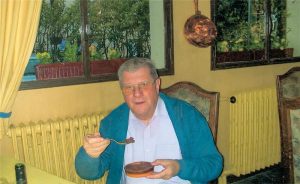
As he reflected on the evening, Richard thought of his mother, who had long ago cultivated his love for chocolate with childhood rewards of candy bars and ice cream. Yet that night in Paris, something shifted. What had once been a simple delight transformed into a grown-up appreciation for sophisticated flavors. That first mousse au chocolat awakened a passion he didn’t yet realize would linger for the rest of his life—a light, airy, sensuous discovery that stayed with him long after the evening faded.
When he finally landed in Lagos with Parbattee and the boys, the reality of his task hit him like the stifling heat and humidity that engulfed them on the tarmac. Standing there with his black medical bag in hand, he felt both the weight of his responsibility and the thrill of possibility. Nigeria was vast—a land of striking contrasts. From the lush swamps of the southern coastline to the arid deserts in the north, its geography mirrored the diversity of its people and the challenges he was about to face.
That first night in Lagos, sleep eluded him. The ceiling fan in his temporary quarters whirred overhead, doing little to dispel the heat or his racing thoughts. What’s the first priority? he wondered. What can’t we function without? As he lay there, listening to the unfamiliar symphony of Lagos at night, three critical challenges crystallized in his mind—challenges that could make or break the entire program before it even began.
Blood came first. In a country where modern medical facilities were scarce and distances vast, Richard knew that access to blood could mean the difference between life and death. In remote Nigerian villages, help was often hours of travel time away. Within weeks of his arrival, he established what he called a “walking blood bank,” systematically typing every Peace Corps volunteer’s blood and creating a comprehensive registry. When crisis struck—and he knew it would—he could mobilize the right donor immediately, regardless of location.
The second challenge proved more delicate to address. The country director, a well-meaning Baptist minister, turned visibly pale when Richard insisted on frank, mixed-gender discussions about sex and contraception. The director’s discomfort was palpable, but Richard stood firm. These weren’t abstract policy discussions—they were practical necessities. After training 700 young adults at American universities for three months, the Peace Corps was scattering them individually across a country the size of Texas, Mississippi, and Louisiana combined. Human nature didn’t change just because volunteers crossed an ocean. Better to have uncomfortable conversations now than face life-altering crises later that could end careers and damage the program’s reputation.
But it was the third issue—smallpox—that kept Richard awake longest. A third of the arriving volunteers had not been fully protected by their previous vaccinations, a discovery that sent a chill through him as he reviewed their medical records. One outbreak could devastate not only the Peace Corps program but also strain relations with local communities who had welcomed these young Americans. The disease spread rapidly in crowded conditions, and many of the volunteers would be living and working in close contact with large groups of Nigerians. His response was immediate and unyielding: a comprehensive revaccination campaign that would reach every volunteer under his care, no exceptions. Prevention is everything, he thought as he organized the logistics. One missed vaccination could undo months of careful relationship-building.
His preparation paid off when the inevitable challenges arose. The blood bank proved its worth during a snake bite emergency in a remote village, where the nearest hospital was hours away—Richard was able to mobilize a donor within minutes. The frank discussions about contraception prevented what could have been multiple unplanned pregnancies that would have ended volunteers’ service and created diplomatic complications. And the comprehensive smallpox revaccination campaign held firm when rumors of an outbreak reached a neighboring region—not a single Peace Corps volunteer contracted the disease, maintaining both the program’s credibility and crucial relationships with Nigerian health officials.

Beyond these three priority areas, Richard handled other emergencies with equal care: a car accident involving volunteers far from any hospital, where his emergency protocols proved essential, and a young man on the brink of suicide who required immediate but discreet evacuation. Each crisis demanded creativity, quick thinking, and the alliances with local Nigerian doctors and officials that Richard had been cultivating since his arrival.
The realization hit him with the force of an epiphany. The vision he had described in his 2-C proposal—training local health workers to multiply his hands—wasn’t a pipe dream. It was already happening here in Nigeria, not because of an institution’s approval but because of necessity.
But even as he tackled these immediate crises, Richard found himself drawn to something deeper. It was in the rural mission hospitals—far from the administrative concerns of Lagos—where he discovered his greatest sense of purpose. These facilities were often isolated, understaffed, and inundated with patients suffering from ailments that required only basic medical knowledge to treat. One afternoon, while visiting a clinic many miles from the nearest paved road, he observed a young Nigerian woman tending to a long line of patients. The woman—a “dresser,” as they were called—moved methodically, her hands cleaning and bandaging wounds with a competence that exceeded her limited training. He paused, struck by the scene. This is exactly what I saw ten years ago, he thought, the memory of the clinic in Cuba flashing before him. Different continent, different people, but the same needs.
He leaned against the doorframe, watching her work. The patients trusted her, and for good reason. She knew what she was doing, and she did it well. Her skills, though basic, were making the difference between suffering and healing for the people in this community. Richard felt a flicker of excitement rise within him. This is living proof of what I’ve been trying to convince the Episcopal Church to let me do, he thought. The answer is right in front of me.

The realization hit him with the force of an epiphany. The vision he had described in his 2-C proposal—training local health workers to multiply his hands—wasn’t a pipe dream. It was already happening here in Nigeria, not because of an institution’s approval but because of necessity. He began working with the most promising dressers he encountered, expanding their training beyond wound care to diagnosing and treating common illnesses—malaria, fever, chest infections, diarrhea, dysentery. To his satisfaction, they quickly proved capable of handling nearly 90% of the healthcare needs in their communities. Watching their confidence grow with each success, Richard’s belief in the concept he’d been nurturing since his time in Cuba deepened.
“I volunteered my time to train these folks in the bush—not in urban centers but in rural missionary hospitals,” he would later recall. “In each of those settings, I selected two people that seemed brighter than most. They just responded to me and had enough English to operate.”
Six months into his Nigerian assignment, Peace Corps Washington asked Richard to cross the country’s eastern border to evaluate medical facilities for a new program in Cameroon. The assignment intrigued him. The newly independent nation was a study in colonial layers: German castles from before World War I stood alongside remnants of French and British rule, physical reminders of Europe’s competing ambitions in Africa.
From the moment his jeep left Tiko airport with a USAID employee at the wheel, Richard found himself drawn into the country’s complexities. At the Kumba Research facility, British scientists eagerly shared their work on parasitic diseases, particularly intrigued by Richard’s initiative to prevent filariasis among Peace Corps Volunteers through weekly doses of Hetrazan. Their discussions about parasitic lung flukes found at Mount Kumba’s base reinforced his growing expertise in tropical medicine.
At night, he stayed with Baptist missionaries near the mountain, sleeping in the same bed that had once hosted the renowned naturalist Gerald Durrell during his journey to the Bamenda Highlands. He wondered if he might find in the room a copy of the well-known book “Alexandria Quartets” by Gerald’s novelist brother Lawrence. But the missionaries’ bookshelves offered no such literary treasures.
While his official agenda focused on assessing the region’s medical infrastructure for incoming volunteers, Richard also pursued a private mission. Through Hausa traders along the West African coast, he had discovered the work of Salefou, a renowned Northern Cameroonian brass artist whose figurines, created using the lost wax method, captured both technical mastery and subtle humor in depicting daily life. Richard wrote ahead to Salefou, requesting a complete set of Salefou’s figurines showing native doctors at work with their patients in Cameroonian villages. He had only seen individual pieces before but hoped to acquire the entire series.

His journey took him through the southern region and Yaoundé, the capital, where the first Peace Corps volunteers would be stationed. When he finally reached Bamenda, Salefou revealed something remarkable—only the second complete set he had ever created, comprising eight native doctors each with one or two villagers. The artist’s enthusiasm for sharing his work with a Western physician did not, however, translate into a bargain. Richard couldn’t help but laugh when Salefou, with great ceremony, announced a price five times what he had expected to pay. The only other complete set, Salefou recalled, had gone to a collector he remembered vaguely as being from either India or Arabia. Despite the steep price, Richard recognized the collection’s unique value; it would become a treasured possession, destined to be inherited by his children.
Before Richard departed, a Baptist minister in Bamenda offered crucial advice for his return journey to Tiko. Six hours into the drive, crossing a savannah of towering elephant grass, they would find a single trace—barely visible tire tracks—branching left from the unpaved Bamenda-Kumba road. The minister’s directions were precise: it would be the only opening until the savannah ended, though easy to miss where the rain-bent grass obscured the path.
Following these directions the next morning, Richard and his driver began the journey back. Six hours later, crossing the savannah as the minister had described, they nearly missed the turn. The elephant grass formed green walls around them as they bumped along the hidden path for twenty minutes. Then suddenly, the grass parted to reveal a village clearing and an unexpected sight: the Café de Paris, a humble wooden shack with a thatched roof.
Thirsty and hungry, they hurried inside the empty restaurant. While his driver ordered beer, Richard studied the hand-lettered menu with growing amazement: soup du jour, chicken, pork, rice, fruit, and—could it be?—mousse au chocolat. Though he ordered soup and chicken, anticipation of the dessert made it hard to focus on the meal. Here, thousands of miles from Paris, he found himself savoring his second-ever chocolate mousse. He lost himself in the experience, each spoonful a small revelation, until he realized his appreciative “oohs” and “aahs” had drawn the attention of the café’s other patrons. His driver shifted uncomfortably as Richard lingered over the unexpected delicacy, but he couldn’t rush this serendipitous moment. If I hadn’t answered the Peace Corps call, he thought, if I hadn’t requested that Paris stopover, I might never have discovered this transformative pleasure.
Back in Lagos, inspired by Salefou’s brass doctors and Cameroon’s layered colonial history, Richard attempted to write a short story, his first. He wove a tale of three generations of missionary doctors—German, French, and British—separated by world wars but connected through their search for the source of their respective brass figurines. When he sent the draft to Manny Lee for review, his mentor responded with characteristic brutal honesty, advising him to stay in the operating room and take care of patients. With the eye of a professional writer and editor, Manny found Richard’s fiction as inept as he himself would be with a stethoscope. It was a humbling reminder that even as his medical expertise grew, Richard still had much to learn about his limitations.
Richard’s life in Lagos settled into a rhythm that extended beyond his Peace Corps duties. He couldn’t turn away those who needed medical care, whether they were patients in mission hospitals or members of the international community. This wider practice led to unexpected connections, like the Spanish ambassador’s family, whose private fisherman delivered a fresh catch to Richard’s door every Friday.
As his second year in Nigeria began, Richard’s curiosity turned toward Bioko, an island forty miles off the Cameroonian coast. Part of Spanish Equatorial Guinea, its capital Malabo was deliberately isolated from outsiders. Spain, nervous about rumors concerning their treatment of the local Bubi population, made visas for outsiders nearly impossible to obtain. But Richard’s connection to the Spanish ambassador proved valuable—not only did he receive a visa, but also a letter of introduction to the captain of the Malaspina, a Spanish oceanographic vessel anchored in Malabo’s harbor.
The journey began with another flight to Tiko airport in Cameroon, followed by a short hop in a single-engine Cessna over the Atlantic to Malabo. After checking into a modest hotel, Richard made his way to the harbor, climbing the swaying stairway to the Malaspina only to find the captain absent. He left the ambassador’s letter and returned to his hotel. Three hours later, a Spanish sailor in a jeep appeared with an invitation to dinner aboard the ship.
The captain defied Richard’s expectations. Tall and jovial with a white beard, he seemed more adventurer than naval officer as they sat at a small cocktail table on the nearly empty top deck. Despite Richard’s self-described “poor Spanish,” they found common ground, the captain taking time to explain his oceanographic work along Africa’s west coast in careful English.
There, under a canopy of stars, the gentle sway of the ship matching the rhythm of the Atlantic, Richard savored a remarkable scene: the Food of the Gods served on a Spanish vessel, off the coast of Africa—a chocolate mousse occasion to be remembered.
The evening took on a new dimension as the captain’s wife joined them, just as Richard finished his aperitif. Though less comfortable with English than her husband, she held her own in the conversation, helping Richard better understand the region. Two sailors in short white coats emerged to set up a dinner table, spreading a heavy white tablecloth that somehow held firm against the gusting tropical wind. The evening proceeded smoothly with a sumptuous seafood dinner.
After dinner, the captain posed what seemed like a casual question: did Richard like chocolate? He boasted that his chef made the finest mousse au chocolat in all Africa, the secret being chocolate from Bioko’s own cacao plants. How strange, Richard mused, that after decades without knowing this dessert existed, I’ve encountered it three times in less than a year, each time more magical than the last.
The captain’s mousse proved “downright sinful,” a supercharged creation with a hint of rum that gave it more body than Richard’s Parisian introduction. Its lighter color suggested the addition of cream, while flecks of chocolate scattered across the top provided striking contrast. There, under a canopy of stars, the gentle sway of the ship matching the rhythm of the Atlantic, Richard savored a remarkable scene: the Food of the Gods served on a Spanish vessel, off the coast of Africa—a chocolate mousse occasion to be remembered.
In the fall of 1962, Dr. Smith faced an unusual and critical challenge. He was tasked with evacuating a non-Peace Corps U.S. government employee from Lagos, Nigeria, to a hospital in Detroit, Michigan. The man suffered from a severe reactive depression and had been unable to sleep for two weeks, despite Smith’s best efforts to provide care at his home. Sedatives, no matter the dosage, had proven ineffective, and the situation had become untenable. Richard had no choice but to arrange for the patient’s transfer to the United States, where more advanced treatment could be provided.
The flight to JFK Airport was relatively uneventful, though Richard remained on edge throughout. Several times during the journey, he escorted the patient to the first-class lavatory to administer Thorazine injections in an effort to calm him. He carried a vial of nikethamide—a powerful stimulant—in case the sedatives caused respiratory depression, a real risk given the man’s fragile state. Richard had never flown with a patient before, and he worried about how the altitude, reduced oxygen levels, and dry air might affect him. Would the already precarious situation escalate midair?
By the time the plane landed in New York, the patient remained wide-eyed and exhausted, his condition unchanged. A three-hour layover for the Detroit connection offered a brief reprieve. Behind the Immigration and Customs area, Richard discovered a small medical room with two beds. He lay down for a much-needed nap while the patient, still restless, paced the floor before eventually lying down as well.
The journey resumed with a connecting flight to Detroit. Upon arrival, they were met at the airport and transported directly to a small hospital on the city’s outskirts. The staff had been prepared for the patient’s arrival. Once admitted, Smith signed the necessary transfer paperwork, but not before questioning a standing order for 100 milligrams of Secobarbital, a sedative prescribed by the attending physician. Dr. Smith voiced his concerns to the nurse on duty, explaining that the patient’s insomnia had persisted for weeks despite stronger medications. Still, the order was carried out.
Before leaving the hospital, Dr. Smith stopped by the patient’s room for a final check. To his astonishment, the man was fast asleep, snoring like a locomotive—a sound that highlighted just how elusive rest had been during the two-week ordeal. For Richard, the moment was a mixture of relief and frustration. Was it simply the act of returning home that allowed him to relax?
Since Richard was already stateside following the unexpected journey home with his patient, the Peace Corps seized the opportunity to bring him to Washington, D.C., for a debriefing with the medical leadership. As the first overseas physician to return to headquarters since operations began, his insights were in high demand.
When asked about his biggest medical challenges with Peace Corps Volunteers, Dr. Smith’s response was as direct as it was unexpected. “Sex,” he said calmly, glancing around the room as the older doctors who had established the overseas medical framework visibly bristled.
Dr. Smith laid out the situation plainly: “After training 700 young adults at an American university for three months, we drop them individually across a country the size of Texas, Mississippi, and Louisiana combined. Of course, they’re going to travel all over the place in their free time to spend it with each other. That’s what 22- to 24-year-old American kids do.”
He went on to explain the practical challenges this created. Volunteers traveled vast distances during their free time to visit each other, unplanned pregnancies could end careers and create diplomatic complications, and sexually transmitted infections required discrete treatment in tight-knit communities where privacy was nearly impossible. The older, more traditional physicians appeared unsettled by his candor, but Richard knew there was no point in sugarcoating the reality they faced.
That evening, Richard joined others gathered around televisions across town to watch President Kennedy address the nation about the Cuban missile crisis. In the midst of what could have become a global catastrophe, Kennedy’s calm presence provided a steadying influence that Richard observed having a positive effect on the worried viewers around him.
Before Richard could brief them about other challenges like car accidents and psychological adjustment issues, the red phone on the director’s desk rang. It was Sarge Shriver calling an emergency senior staff meeting. The director, recognizing that most Washington staff only knew about overseas operations through cables and occasional phone calls, invited Richard to attend along with his chief administrative officer.
Richard found himself seated against the wall with about a dozen others, behind twenty senior staff members arranged around a long rectangular table. When Sarge Shriver entered, his usual smile was nowhere to be seen. His mouth was tight, his eyes steely with concern. The room fell silent as he sat down, hands clasped over his mouth, more somber than most had ever witnessed.
“Jack just called,” Shriver began, referring to President Kennedy. “Two fighter jets conducted low-level flights over a Cuban missile site. The missiles are now aimed directly at the United States.”

The collective groan around the table was almost palpable. Shriver continued, outlining the need to evacuate Peace Corps Volunteers immediately. The plan seemed logical at first—but then Richard realized what it truly meant. Evacuate them? Back to the U.S.?
Without thinking, Richard stood up. “Are you out of your mind?” he blurted out. The words echoed across the room. All eyes turned to him, a mix of shock and curiosity on their faces. He pressed on, undeterred. “Where do you think those missiles are aimed? They’re safer in the field than they are here.”
Shriver’s sharp gaze locked onto him, but he didn’t respond immediately. Richard returned to his seat, his words hanging in the air. Did I just blow my career? he wondered. But looking around the room, he saw expressions of agreement and sympathy on many faces. The reality of their situation—and concern for their families in the Washington area—was beginning to register. Shriver announced he would meet with Regional Program Directors within the hour to develop an action plan, then left the room.
That evening, Richard joined others gathered around televisions across town to watch President Kennedy address the nation about the Cuban missile crisis. In the midst of what could have become a global catastrophe, Kennedy’s calm presence provided a steadying influence that Richard observed having a positive effect on the worried viewers around him.
The following morning, he boarded a flight back to Nigeria, determined to continue his work. The crisis would soon pass, but the experience had crystallized something important for Richard. The Peace Corps volunteers were exactly where they needed to be.
His duties as Peace Corps physician took him on endless rounds through villages and countryside, often traveling 200 to 300 miles between visits to check on volunteers scattered across Nigeria. From his office in Lagos, he developed preventive medicine programs, scheduled booster shots and annual physicals, and kept constant watch for signs of disease among the volunteers. When volunteers fell ill, he directed them to local doctors for minor ailments or arranged evacuation to the modern teaching hospital in Ibadan or Lagos for more serious cases. Yet between these official duties, he found himself drawn more and more to the potential he saw in Nigeria’s rural healthcare workers.
As the sun set on another long day, Richard sat beneath a mango tree with a group of dressers gathered around him. They asked questions, their eagerness to learn evident in their voices. He answered each one with care, knowing their success would ripple outward to the communities they served. Above them, the first stars began to pierce the darkening sky. This is how you multiply hands, he thought, a sense of purpose steadying him for the work still ahead.
His time in Nigeria would prove transformative, not just for the communities he served but for his own understanding of how lasting change could be achieved. The success stories weren’t about Americans swooping in with solutions, but about mutual effort and shared investment in outcomes. The most sustainable changes grew from the expressed needs of community members themselves, nurtured through partnership rather than imposed from above. When Richard finally left Nigeria in mid-1963, he carried with him more than just memories—he had gained a blueprint for the future.
The vibrations of the plane’s engines pulsed through Richard’s body as he watched the Nigerian coastline recede beneath the wing. His black medical bag, now worn from two years of service, rested at his feet. He was returning to Washington to take on a much larger role as newly assigned Africa Regional Medical Officer, overseeing all Peace Corps doctors across the continent.
A patch of turbulence jolted him from his reverie. His mind shifted to the young dresser cleaning an infected wound with careful precision. Her movements were confident, her manner calming. This is the key, he said to himself. Not more doctors in white coats. Not fancy hospitals. But people—local people—trained to meet their community’s needs. We built something real there. He pulled out his notebook, beginning to sketch ideas that had been forming throughout his time in Nigeria.
As the plane crossed the Atlantic, Richard’s pen moved faster across the page. The disparities he’d witnessed between sophisticated teaching hospitals in Lagos and the desperate needs of rural communities demanded a new approach. His experiences had shown him that healthcare workers didn’t need years of medical school to make a real difference. They needed targeted competency-based training, support, and connection to a larger system.
This could work anywhere, he thought, underlining a section in his notes. Not just Nigeria. Not just Africa. Anywhere people are willing to learn, to serve their communities. The vision that had first stirred in him as a young man in Cuba was taking clearer shape with each mile that carried him toward Washington.
What had begun as an urgent mission to protect Peace Corps volunteers had evolved into something far more profound—a blueprint for transforming healthcare delivery in underserved communities worldwide. Richard smiled slightly, closing his notebook. The real work was just beginning.
Late Summer 1963 – Washington, D.C.
The view from Smith‘s new office window swept across the National Mall, but his mind was still in Nigeria. The sounds of typewriters and hushed conversations in the Peace Corps headquarters couldn’t drown out his memories of dirt roads, village clinics, and the faces of the “dressers” he’d trained.
How did I get here? he wondered, straightening the nameplate on his desk that read “Africa Regional Medical Officer.” Just months ago, he’d been treating volunteers in remote Nigerian villages. Now he was overseeing every Peace Corps doctor on the continent of Africa. The promotion had come quickly, and the opportunity to oversee healthcare across an entire continent was undeniable. But as he adjusted to the sterile world of Washington bureaucracy, he felt the tug of doubt. Could he make the same impact from behind a desk? Or would the numbers, memos, and meetings swallow the humanity he’d found in the field?
While decisions were made in polished conference rooms, Smith knew that the heart of the Peace Corps’ mission pulsed in the field. As head of health operations spanning 44 countries, Smith understood his job wasn’t to sit idly behind a desk.
By 1964, another promotion landed him in an even larger role as Deputy Director of the entire Peace Corps Medical Program Division. His most important partnership came with Dr. James Banta, Director of International Health at the Department of Health, Education, and Welfare (HEW). Together, they formed a powerful alliance between the Peace Corps and HEW, and Smith found in Banta an ally who shared his vision. Their conversations often stretched late into the evening, plotting ways to revolutionize healthcare delivery in underserved areas across the globe. Banta understood what Smith had seen firsthand: that solutions didn’t always need to come from doctors. Training local providers—embedding care within communities—was the key to scaling healthcare access in places where traditional systems couldn’t reach.
But Dr. Smith‘s work wasn’t easily confined to an office in Washington, D.C. While decisions were made in polished conference rooms, Smith knew that the heart of the Peace Corps’ mission pulsed in the field. As head of health operations spanning 44 countries, Smith understood his job wasn’t to sit idly behind a desk. It was to ensure that Peace Corps doctors had what they needed to fight disease, deliver care, and meet crises head-on in the most remote corners of the world. He spent more time on the ground than in his office, stepping into clinics, meeting with country directors, and solving problems that couldn’t wait for bureaucracy to catch up.
When reports reached Washington that Peace Corps volunteers in Gabon were cooking with gasoline-filled garbage cans, it wasn’t hard to send word for them to stop. But the situation presented an opportunity Richard couldn’t resist: a chance to visit Lambaréné and meet the famous Dr. Albert Schweitzer himself. Schweitzer was not only a towering figure in medicine but also a personal inspiration for Richard—a man whose work in the jungle and love of Bach’s music had long fascinated him. So, Smith arranged his visit, using the gasoline issue as a reason to see the situation for himself and, more importantly, to sit across from the man who had turned both medicine and music into tools of change.
1964 – Gabon
The jeep jostled along the dirt road, weaving through a dense wall of jungle that seemed to ripple with movement. A cicada’s piercing drone cut through the air, rising and falling like a wave, while high above, a flock of green parrots burst from the canopy, their wings flashing in the sunlight. The air inside the vehicle was thick, humid, and carried the faint tang of damp earth and decaying vegetation. When the jeep finally rolled to a stop at the Peace Corps station in Lambaréné, Richard climbed down, brushing red dust from his pants.
When Richard arrived at the Lambaréné station, he immediately shut down the dangerous practice of volunteers cooking over gasoline-fueled fires and worked with the country director to implement safer alternatives. After resolving the safety issues at the Peace Corps station, Richard turned his attention to the real reason for his visit.
Down the winding dirt road, Albert Schweitzer’s hospital came into view, its corrugated metal roofs gleaming in the late afternoon sun. The buildings reflected Schweitzer’s ingenuity—corrugated metal roofs designed to channel away Gabon’s torrential rains while allowing air circulation in the stifling heat.
Inside Schweitzer’s bungalow, the air was cooler, carrying the faint scent of varnished wood and books. Schweitzer rose slowly from his desk as Richard entered. Here was the man whose “Reverence for Life” philosophy and decades spent working in the African jungle had earned him global renown, culminating in the Nobel Peace Prize in 1952. His white shirt was neat but worn at the cuffs, his movements were deliberate, and his sharp eyes studied Richard with quiet curiosity.
“Willkommen,” Schweitzer said, his voice low but warm. Richard returned the greeting in halting German, nodding toward the Peace Corps psychiatrist who accompanied him, ready to interpret if needed.
After brief pleasantries, Richard explained what had brought him to Gabon: the gasoline fires, the volunteers’ dangerous improvisation, and the steps he had taken to address the problem. Schweitzer listened intently, his hands steepled beneath his chin.
“You have come to extinguish a fire,” Schweitzer said after a pause, a faint smile forming on his lips. “But I sense there is more to your visit.”
As the conversation turned to Schweitzer’s work, Richard’s eyes were drawn to a small pile of records stacked near the piano in the corner of the room. The labels, though faded, bore a name that needed no translation: Bach. Schweitzer noticed his gaze and smiled faintly.
“You play?” Schweitzer asked.
Richard nodded. “I played Bach’s fugues on the pipe organ when I was younger. They’re not easy pieces.”
“No, they are not,” Schweitzer replied, his tone softening. “They demand precision—discipline of the mind and soul. I recorded them often, during my trips back to Europe. The funds from those recordings…” He gestured to the hospital outside the window. “They built this place. Without music, none of this would exist.”

Richard nodded, letting the weight of Schweitzer’s words settle. For a moment, they sat in thoughtful silence, the sounds of the jungle filtering through the open window. Then Richard leaned forward slightly, his expression shifting. “I’ve been working on an idea, one I believe could transform healthcare in places like this,” he began. “It’s about training non-physician providers—local people who can handle basic healthcare tasks, freeing doctors to focus on the most complex cases.”
He described his experiences in Cuba, where minimally trained workers had saved countless lives, and among the Nigerian dressers, where similar principles had proven effective. “It’s not about replacing doctors,” he explained. “It’s about extending their reach. One person can only do so much, but if we train many hands, we can multiply that effort a thousandfold.”
Schweitzer leaned back in his chair, his gaze thoughtful. His fingers tapped lightly on the armrest as though playing an unseen melody. When he finally spoke, his voice was measured. “It is a bold idea. But bold ideas often meet resistance—from governments, from professionals who fear losing their authority. You will need patience—and allies.”
“I’ve faced resistance before,” Richard replied. “But I’ve also seen the need. And I know it can work.”
Schweitzer studied him for a long moment, then smiled faintly. “Perhaps you are right. Perhaps the future does belong to many hands.”
As Richard left the bungalow, his gaze lingered on the piano before returning to the hospital compound—the gleaming roofs, the bustling patients, and the staff below. Schweitzer’s work was extraordinary, but it was the work of one man—a singular achievement born of vision and relentless dedication. Richard’s vision was different. It wasn’t about what one person could build; it was about what many could sustain together.
Back in the jeep, as the jungle closed in around him, Richard’s thoughts crystallized. If Schweitzer could raise roofs with his vision, I can raise an army of hands to carry the work forward. Many hands, working together—that’s the future.

Additional copyediting by Melanee Nelson