[smartslider3 slider=125]
“You are joining us at what I consider to be the most challenging time in the history of health and healthcare,” said Dean Ramsey. “Research is changing what we know about health, disease, how to diagnose, and treat disease. What you will be doing is, of course, healthcare. But what we do—what you will be doing—is about improving health. It’s also a challenging time—a time of uncertainty. We don’t really know what the US healthcare system is going to be like in terms of providing coverage for patients to see us. Regardless of what goes on with that Senate Bill in Congress, access to healthcare is one of our primary problems. It’s one of the reasons I say that this is one of the most challenging times in history.”
“Too many people around the world, and certainly too many citizens of our country, do not have appropriate access to healthcare,” continued Dean Ramsey. “At UW Medicine, it’s our mission to improve the health of the public. How we’re going to change in the next 10, 20 to 30 years will be led by you.”
MEDEX Northwest is part of the Department of Family Medicine at UW Medicine. The department’s new chair, Dr. Paul James, formerly of the University of Iowa, addressed the crowd next.
[smartslider3 slider=126]
“I feel the excitement and energy in this room,” said Dr. James. “You’re in a very special place and, as Dr. Ramsey says, you’re in a very special time. You have chosen the PA profession. I hope you’re here for the right reason which, in some way, relates to service to others. You’re going to work really, really hard. And you really need to be motivated for the right reasons.”
“I want you to think about your role as a learner,” added Dr. James. “Now that you have started on this pathway, it’s going to be hard to turn back. You invested a lot of money. So let’s work hard because there are people out there—at their jobs today, having breakfast this morning—that are going to come into contact with you, and they’re going to ask for your help. You don’t know who they are—they’re somebody’s mother, child, brother or sister—and they’re going to need you to know what you’re doing. That’s a heavy burden, but there’s great opportunity in that. Because healthcare today is a team sport. I’m a well-trained doctor, but I’ve been put in situations where I didn’t think I had everything I needed. You can be put into situations where you have to think methodically, you have to think disciplined, and you have to give your best to others. And we can do that as a team. And we can do that knowing that each of us are trained to do our part.”
“This is a great day to think of as a transition from being whoever you were in your past life to now being on this pathway where you’re going to intersect with patients, and you’re going to help them. There is no greater experience in all the world than to help others. You’re in the right place, you’re in the right time. You’re in a great program.”
[smartslider3 slider=127]
The orientation event continued with faculty and staff introductions, and a presentation on the historic origins of the MEDEX Northwest program under the leadership of its founder, Dr. Richard A. Smith.
The morning concluded with the students and faculty from each site breaking into a group meeting. The largest site is Seattle with 50 students, followed by Spokane at 30, Tacoma with 27 and Anchorage with 23.
Among the 2017 incoming class are 51 males and 79 females. 16.5%, or a total of 22, are military veterans. 110 come from within the 5-state WWAMI Region: Washington, Wyoming, Alaska, Montana and Idaho. 20 are residents from outside that area.
We’d like you to meet six of these new students, each of them promising for their own unique accomplishments and aspirations. We think you’ll agree that the future of the PA profession is looking bright.
Jake Collins – Seattle Class 51 Jake Collins comes to the MEDEX Northwest program from a position of healthcare advocacy with the LGBT community. “It’s been kind of a stepwise journey,” he explains. Originally from Dacula, Georgia, Jake got his MPH from the University of Arizona. That led him to Los Angeles to work in HIV/AIDS non-profits. “I was a health educator for a while and ended up getting involved with an organization called The Men’s Health Foundation, part of an LGBT clinic in West Hollywood,” Jake says.
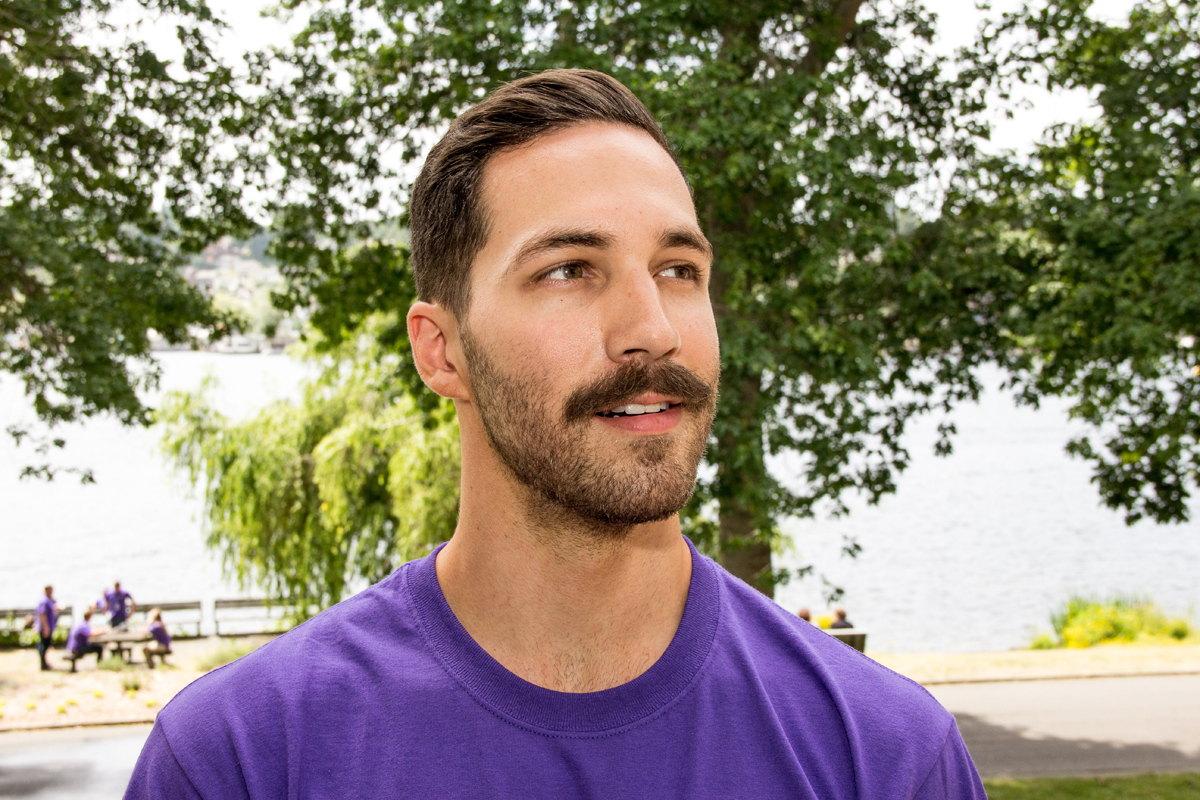 The Foundation also performed clinical research, and Jake got involved with their clinical research doing HIV treatment trials.
“I really enjoyed this because I got to work with the LGBT patient population, mostly gay HIV positive men,” he says. “Coordinating research trials was a great experience. I always knew I wanted to work with this specific population, but this gave me the experience in a clinical setting to kind of dip my toes in the water and see if that was something I was interested in.”
Jake became the face of the clinic for the patients participating in research trials. As the clinical research coordinator, he was taking vitals, drawing blood, doing entry, etc. But he didn’t really have the opportunity to make any decisions about the patient’s health.
The Foundation also performed clinical research, and Jake got involved with their clinical research doing HIV treatment trials.
“I really enjoyed this because I got to work with the LGBT patient population, mostly gay HIV positive men,” he says. “Coordinating research trials was a great experience. I always knew I wanted to work with this specific population, but this gave me the experience in a clinical setting to kind of dip my toes in the water and see if that was something I was interested in.”
Jake became the face of the clinic for the patients participating in research trials. As the clinical research coordinator, he was taking vitals, drawing blood, doing entry, etc. But he didn’t really have the opportunity to make any decisions about the patient’s health.
[smartslider3 slider=128]
“The physician, PA or nurse practitioner would see the patient for the physical exams, have close contact, make decisions on their health, and offer treatment plans,” he says. From observation and, later, shadowing, Jake realized that this was the role that he wanted to have.
“I wanted to be able to have that kind of impact,” he says. “Seeing the role that LGBT Health Services have in our community, I mean, we do have specific health needs. Having a competent provider who actually cares enough to put in that extra thought and effort, well, it really means a lot to the patient. That is something I wanted to do.”
The way Jake tells it, there was a PA in his office that saw his potential and pushed him to consider the physician assistant path. “I really appreciated that because I was content with my job at the time. But I think he believed in me and encouraged me to look into it.”
From that time of realization, it took Jake around two and a half years to get to the point where he was accepted into the MEDEX program. Of course, there was a lot of planning, including making certain he had all the necessary prerequisites. “I didn’t have all of them, and I think some of them were getting close to expiring,” he says.
Looking ahead, Jake sees himself continuing working with the LGBT community upon graduation from MEDEX in August of 2019.
“That’s the main reason why I want to become a PA,” he states. “Working in HIV has been the highlight of my career so far, and being involved in the health care for a community that is so personally important to me is like a dream come true.”
We ask Jake if he expects to return to Los Angeles after graduation.
“Actually, this program worked out really well for me because I’ve always kind of wanted to live in Seattle,” he says. “I love the city, and I’ll probably stay here. It’s a big HIV center on the West Coast, and there are a lot of physicians already doing great work up here. So I anticipate being here for a while.”
Jake takes in a deep breath then beams his contagious smile.
“I’m very excited to get started here with MEDEX, and I’m so happy that the school chose me.”
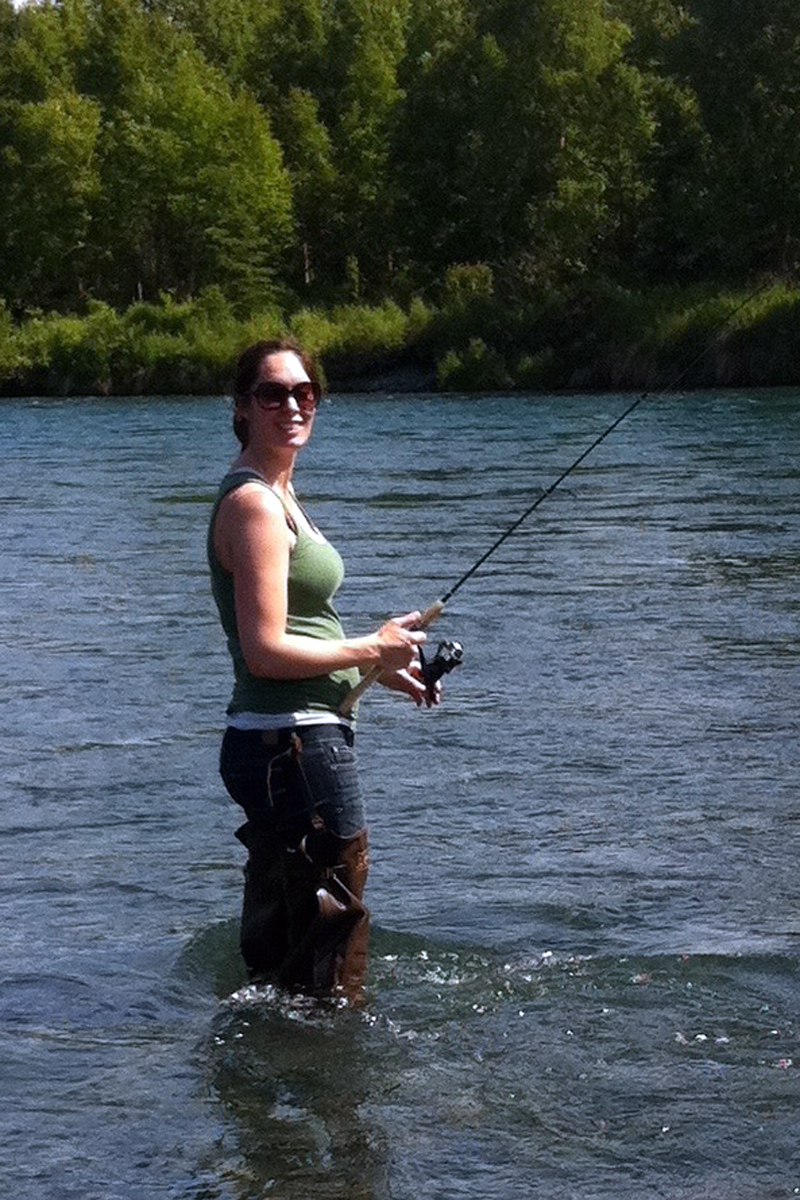
Jenelle Johnson – Anchorage Class 9 Jenelle Johnson is a champion of remote Alaskan community health. Originally from Nome—population 3,800—she sees one of the biggest challenges as getting trained providers out into these rural areas. “As I understand it, it’s hard to get people to make that initial trip to rural Alaska,” she says.
 In the face of these shortages, the state puts a lot on local community health aides. “I think they’re a really valuable resource,” says Jenelle. “I’d like to learn more about the role our health aides play and eventually work alongside them.”
Alaska’s health aide network dates back to before statehood. For patients living in some of Alaska’s most remote communities, the health aides can make all the difference. The Alaska Community Health Aide Program network’s strength lies in its strong ties to the local communities. Individual community health aides usually have personal ties to the places they serve. Today, CHAP consists of a network of approximately 550 Community Health Aides/Practitioners (CHA/Ps) in more than 170 rural Alaska villages.
In the face of these shortages, the state puts a lot on local community health aides. “I think they’re a really valuable resource,” says Jenelle. “I’d like to learn more about the role our health aides play and eventually work alongside them.”
Alaska’s health aide network dates back to before statehood. For patients living in some of Alaska’s most remote communities, the health aides can make all the difference. The Alaska Community Health Aide Program network’s strength lies in its strong ties to the local communities. Individual community health aides usually have personal ties to the places they serve. Today, CHAP consists of a network of approximately 550 Community Health Aides/Practitioners (CHA/Ps) in more than 170 rural Alaska villages.
Matthew Yap – Spokane Class 21 “I’ve never lived out of the state of Hawaii,” says Matthew Yap. “So, you know, this is a new experience.” Matthew was raised on The Big Island, a land mass largely covered by volcanic basalt except for the fertile greenery hugging the coastal edges. “I grew up hunting and fishing,” he explains. “Life was rural and pretty much do-it-yourself. We didn’t have county water, we had catchment water. It was really different.”
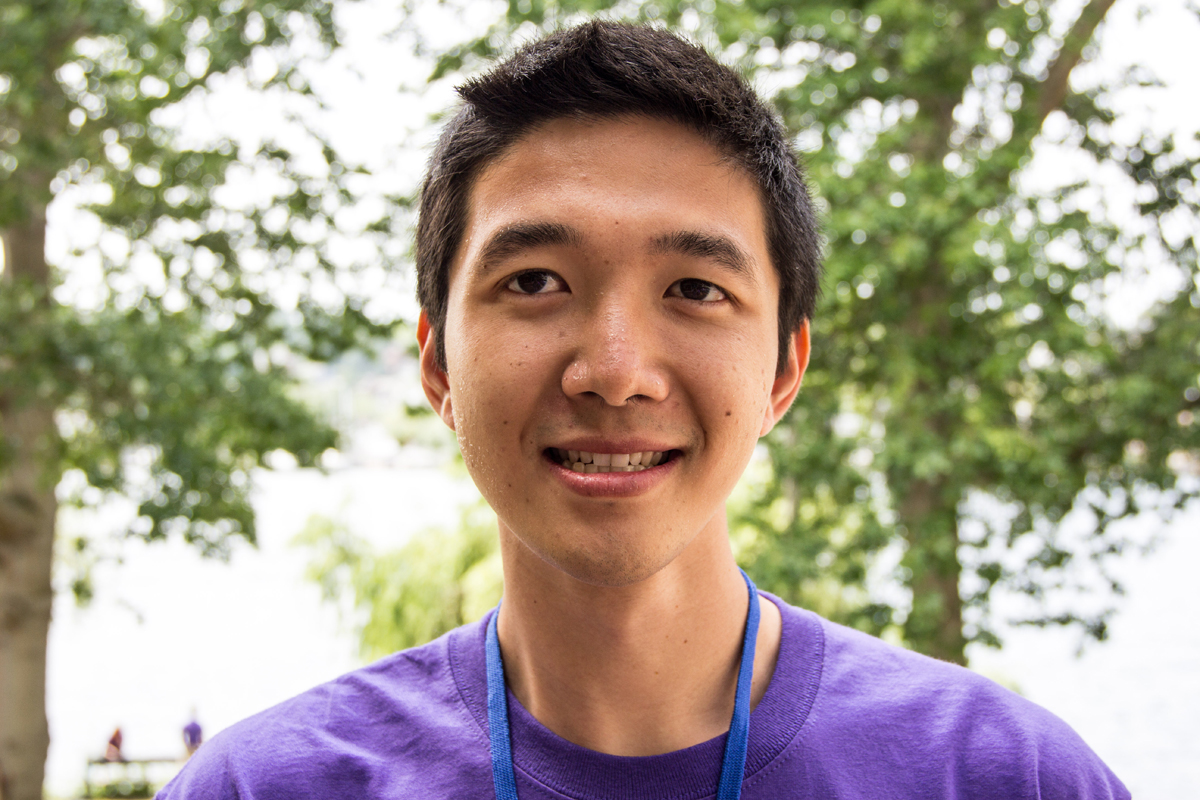 Of Chinese and Japanese ancestry, Matthew Yap’s family has been in Hawaii for five generations now.
While speaking with him we had to ask for clarification on a few words.
“I’ve got to control my Pidgin,” he says in response. “It’s our local language in Hawaii, and we have a different accent. It’s expected there, but no one knows what I’m speaking here.”
Of Chinese and Japanese ancestry, Matthew Yap’s family has been in Hawaii for five generations now.
While speaking with him we had to ask for clarification on a few words.
“I’ve got to control my Pidgin,” he says in response. “It’s our local language in Hawaii, and we have a different accent. It’s expected there, but no one knows what I’m speaking here.”

Molly Reque – Anchorage Class 9 Pursuing a career as a physician assistant has been a lifelong dream for Molly Reque, and she is excited to finally be here. “Excited and a little nervous,” she tells us. “It is definitely a huge life change.” Molly comes from a military background. She had just finished school at Bemidji State University when she felt obligated to join the US Army. Molly went to basic training at Fort Leonard Wood, Missouri, and trained to become an Army medic at Fort Sam Houston in Texas.
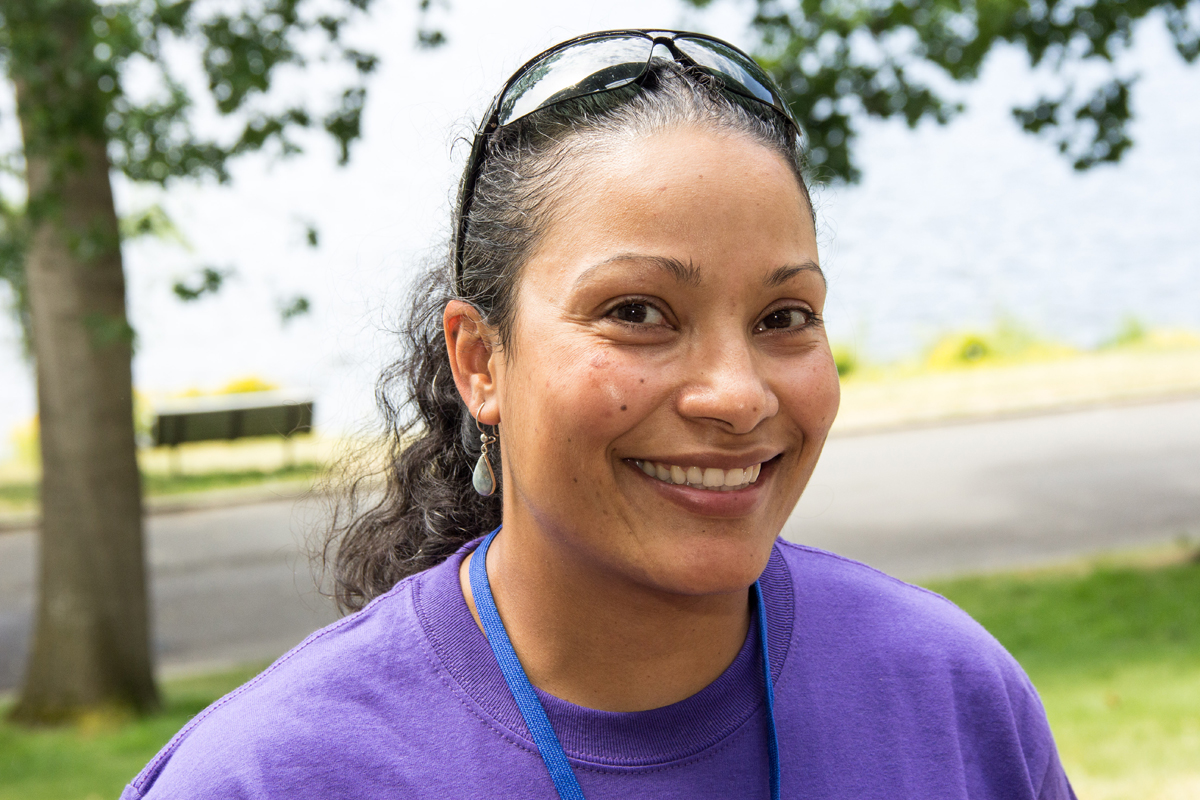 Molly had studied pre-med in college because, “I enjoy helping people,” she says. “I have empathy for the pains in the world. At the same time, I like learning and problem-solving.”
Her first deployment to Iraq was as a ground medic supporting the convoys. Molly worked to keep her fellow soldiers alive until the MEDEVAC helicopters arrived and picked them up. “It was a different part of my life, but a good part,” she says. “I’ve never regretted it.”
Molly had studied pre-med in college because, “I enjoy helping people,” she says. “I have empathy for the pains in the world. At the same time, I like learning and problem-solving.”
Her first deployment to Iraq was as a ground medic supporting the convoys. Molly worked to keep her fellow soldiers alive until the MEDEVAC helicopters arrived and picked them up. “It was a different part of my life, but a good part,” she says. “I’ve never regretted it.”

[smartslider3 slider=130]
“I was now in the Alaska National Guard, so I was able to hold a civilian job and fly for the guard,” Molly says. She worked full-time as a medical assistant in Palmer, went to school in the evenings to cover her prerequisites, maintained the mandatory military flight hours required, and eventually reapplied to MEDEX for a third time.
The third time’s the charm, so here Molly sits today as a member of MEDEX Anchorage Class 9. Graduation is two years away, and there are many academic and clinical hurdles ahead. But given her extensive background with the military, we wonder what kind of medicine she envisions for herself at the end of it all.
“Probably emergency medicine, or maybe surgical,” she says. “Something that requires you to think on your feet.”
Michael Johnson – Tacoma Class 5 Michael Johnson has a bold assessment behind his decision to attend physician assistant training. “With everything that’s going on in healthcare right now, it’s a very unstable climate. We don’t know what’s going to happen tomorrow. Literally. So I really feel that now it’s an important time to become a provider. I really want to help to extend healthcare to as many people as possible. That’s what I see myself doing. That is my dream.”
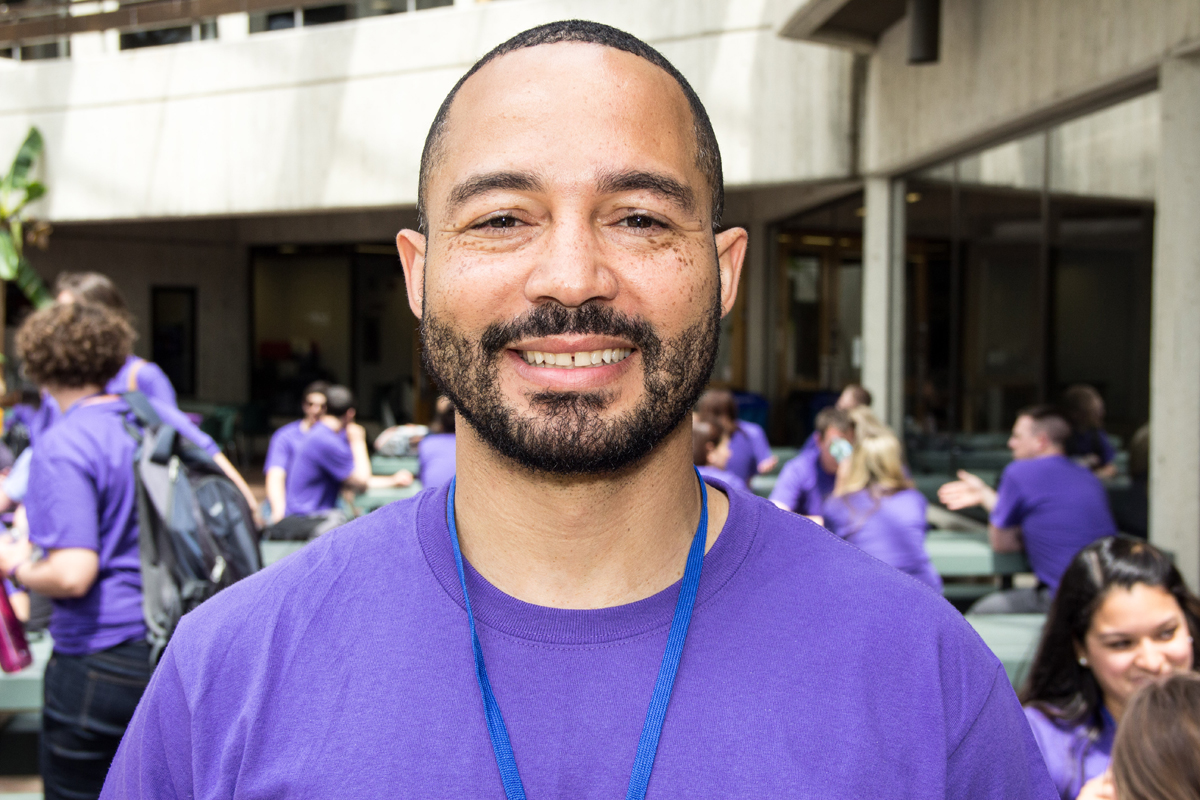 Clearly, Michael is a strong mission fit for MEDEX Northwest.
His path to the program started in the Air Force where he trained as a laboratory technician. He was stationed in various places, including Arizona, and then went to Alaska. “That was a bit of a temperature change there,” he says with a smile.
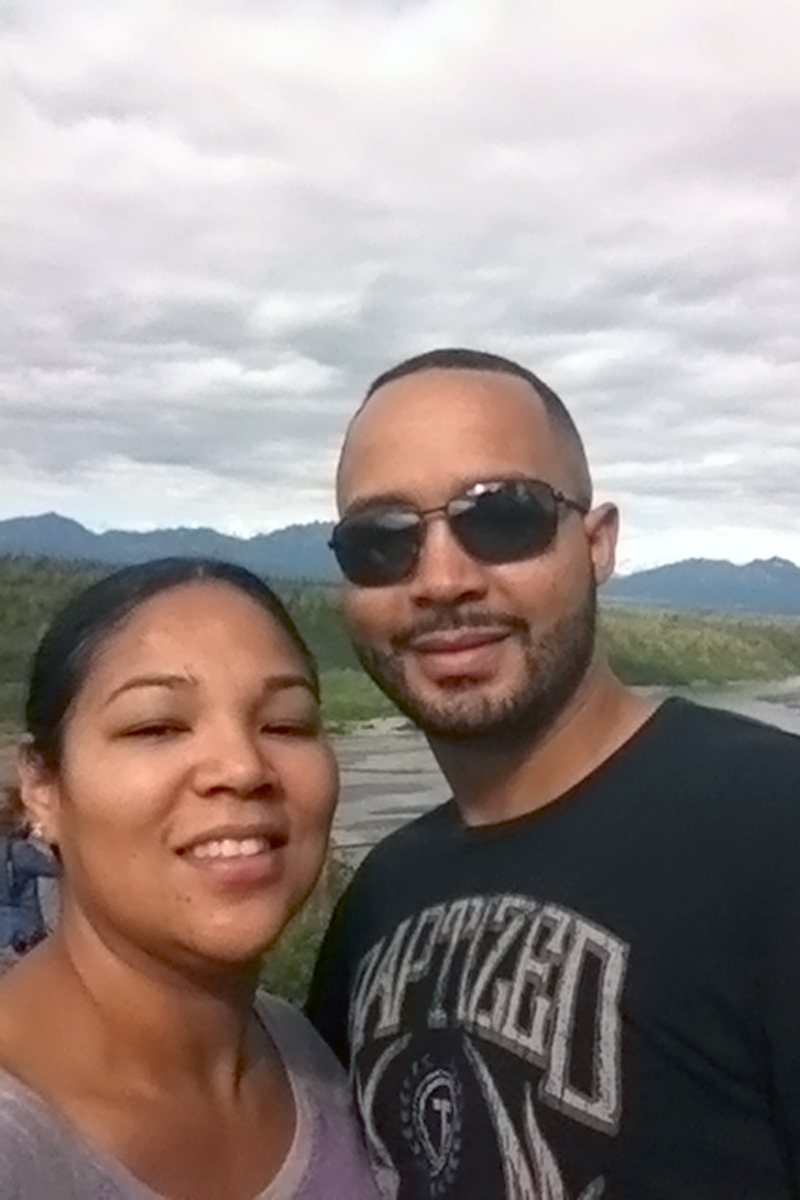
Michael transitioned out of the military, moved to Alaska and started a family with his wife. There, he worked for the Providence Health System for about 12 years as a laboratory technician in various roles. These included work as a generalist in the chemistry and hematology departments and then, later on, work in microbiology.
Clearly, Michael is a strong mission fit for MEDEX Northwest.
His path to the program started in the Air Force where he trained as a laboratory technician. He was stationed in various places, including Arizona, and then went to Alaska. “That was a bit of a temperature change there,” he says with a smile.
Michael transitioned out of the military, moved to Alaska and started a family with his wife. There, he worked for the Providence Health System for about 12 years as a laboratory technician in various roles. These included work as a generalist in the chemistry and hematology departments and then, later on, work in microbiology.
[smartslider3 slider=131]
“I knew my dream was a possibility,” he says. “MEDEX is the only program that I applied to. Their mission statement resonates with me.” Michael is referring to the MEDEX’s focus on primary care with an emphasis on underserved populations.
“My wife is Native American,” Michael says. “Her uncle lived in a remote Alaskan village without a lot of access to healthcare. He died of Hepatitis C. To see that—to see that from the perspective of a loved one—really does something to you. That experience really solidified for me the desire to help people that live in underserved communities.”
Michael and his wife bought a house here in Washington, but they still own a home in Alaska. That always leaves the possibility of returning north once he graduates from MEDEX.
“I’d love to go back,” he says. “My dream job is to work in a remote village in Alaska, because I know there’s a great need for that. Whether the cards will play out that way, you know, at this stage is still pretty early. But my ultimate goal and dream job is to work out in a remote facility.”
Mylinda Cizmowski – Anchorage Class 9 Mylinda Cizmowski is in a bit of shock. She’s from Healy, Alaska—population just over 1,000. Now she’s spending the next six weeks in Seattle with 130 incoming students to the MEDEX 2017 program. “Oh, my, there are so many people,” she exclaims. “It’s so hot, and the streets are so different. I hear Amazon comes straight to your door within hours, in a day or less than a week.”
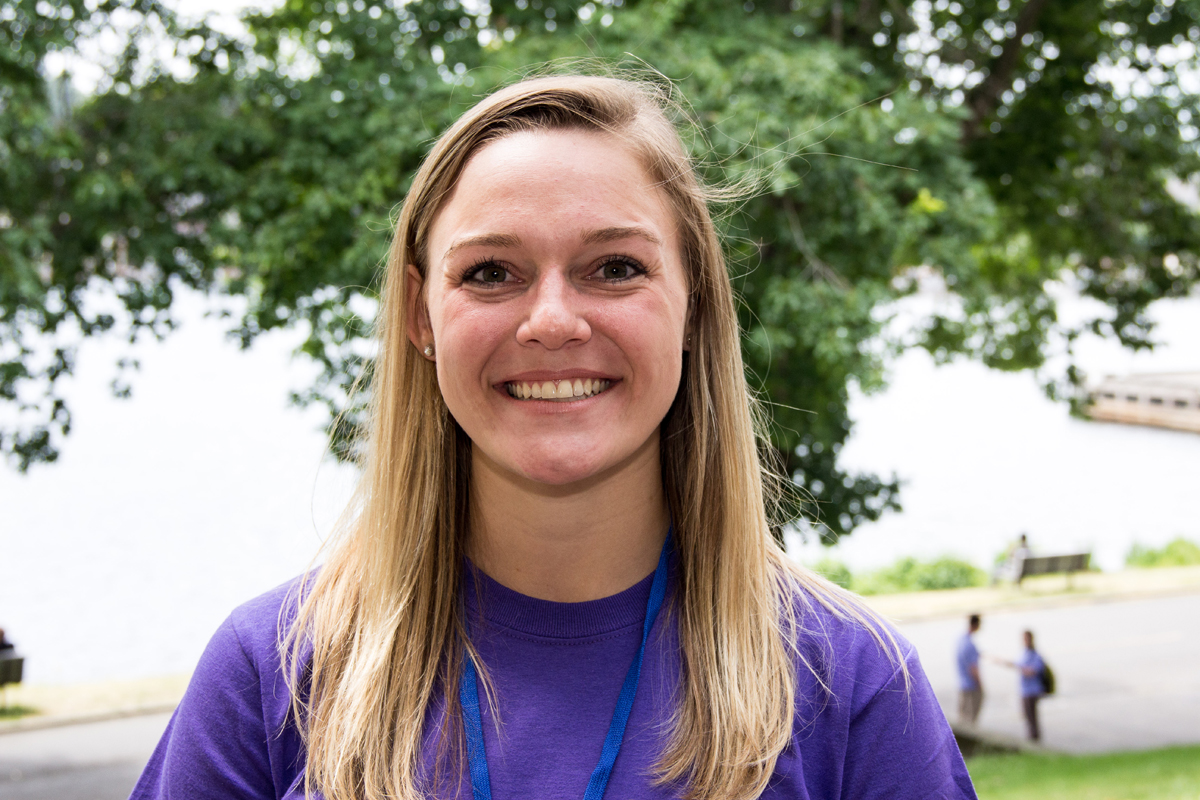 At age 24, Mylinda is one of the youngest members of the incoming class. And yet the experience she brings to MEDEX belies this fact.
As an EMT-3, it was Mylinda and a physician assistant running a 9-to-5 medical clinic at Clear Air Force Base about 70 miles south of Fairbanks. “It was just me and the PA,” she says. That included emergency services after hours.
Oh, and did we mention this was 24 hours, a week at a time?
“I would go to work for a week, then I’d come home for a week,” she says. “So we stayed, we slept there. They had housing for us.” Mylinda would make the commute to her weeklong shift from Healy, about 35 miles away.
At age 24, Mylinda is one of the youngest members of the incoming class. And yet the experience she brings to MEDEX belies this fact.
As an EMT-3, it was Mylinda and a physician assistant running a 9-to-5 medical clinic at Clear Air Force Base about 70 miles south of Fairbanks. “It was just me and the PA,” she says. That included emergency services after hours.
Oh, and did we mention this was 24 hours, a week at a time?
“I would go to work for a week, then I’d come home for a week,” she says. “So we stayed, we slept there. They had housing for us.” Mylinda would make the commute to her weeklong shift from Healy, about 35 miles away.